
New Scottish air ambulances to end ‘heartbreaking’ separation of sick children from parents on mercy flights

Replacement fleet will enable medics to keep in touch with experts on the ground in flight
The “heartbreaking” need to fly sick children to hospital without a parent to comfort them will be significantly reduced thanks to a new Scottish air ambulance fleet of larger aircraft.
The Beechcraft King 360 planes will have an extra seat to enable a parent to travel with their child, which the Scottish Ambulance Service (SAS) described as a “critical” part of their care.
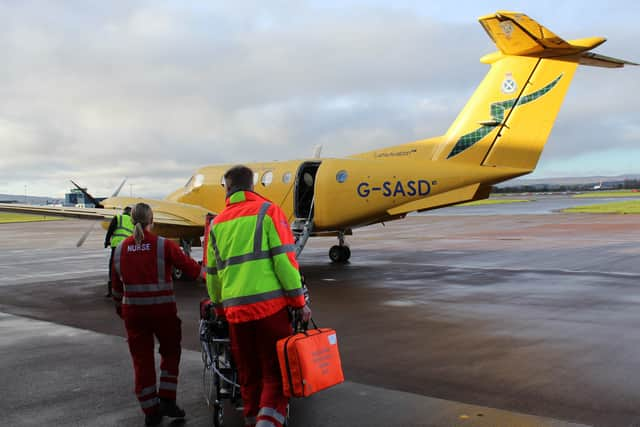

The first of the two US-built aircraft, to be based in Glasgow and Aberdeen, is due to arrive by the end of the month as part of an upgrade of the air ambulance fleet which will also see its two Glasgow and Inverness-based helicopters replaced.
Andy Moir, head of the SAS’s air ambulance service, told The Scotsman: “One of the challenges we have for paediatrics where you have got a team and a very sick kid, the ability to take a parent on board as well is sometimes limited.
“That’s a real benefit the new fixed wing aircraft will bring.”
SAS associate medical director Dr Andrew Cadamy said: “That is a big deal - taking a sick child but not being able to accommodate a parent on the same aircraft.
“The new aircraft will have an additional useable seat which will mean the number of occasions where we have to separate the parent from the child will be reduced.

“When a child is very sick and your anxiety levels are really high, the thought of being separated from your child under those circumstances is heartbreaking.
“That’s a tremendously impactful thing to have to do. The emotional support from a parent is critical to the therapeutic and compassionate care of a child, and we want to avoid [separating them] wherever we possibly can.”
But Dr Cadamy added: “Ultimately, clinical care has to take priority. If you are trying to save a child and have a choice between a very long journey by road and ferry versus a short time in getting a patient to a place of clinical safety, even if you have to separate the child from a parent, most parents are accepting of that.”

Dr Cadamy said the aircraft would bring other improvements, such as increased range and ability to fly in worse weather.
New batteries will be a “game changer” by providing heating to keep the patient warm without noisy engines being kept running.
Paramedics will also be able to keep in touch with colleagues on the ground in flight with satellite phones.
Dr Cadamy said: “It will be a big enhancement because giving advice to our healthcare practitioners in remote rural Scotland is a big part of these services - advising non-specialists on how to look after the sickest of patients which they won’t see very often.
“Currently, when we get in the aircraft, that communication is interrupted, but it should now be more seamless.”
Dr Cadamy said pilots also would no longer have to squeeze between patient and medical staff to reach the flight deck.
He said: “That is not necessarily going to allow us to have the capability to carry a patient with suspected Ebola or something at the very high risk end of the spectrum, but it would allow us, if we had another pandemic like Covid, to continue to serve the islands and remote parts of Scotland. That’s a significant improvement.”
Comments
Want to join the conversation? Please or to comment on this article.