
Exclusive:Potholed Scotland: Deteriorating roads 'outpacing ability to fix them'
Conditions have worsened for the second year in a row according to official figures

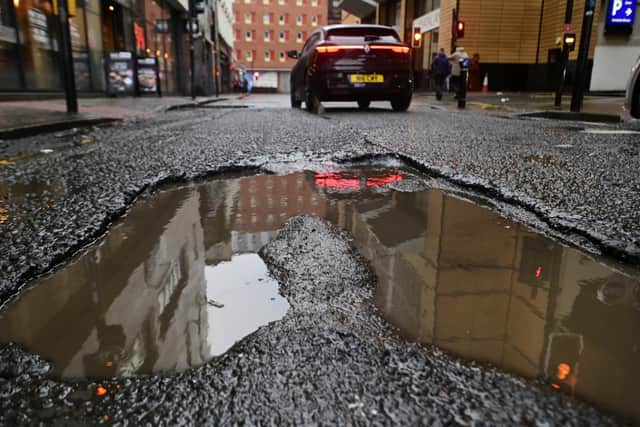
It is confirmation of what every driver will suspect as they venture through the minefield of Scotland’s potholes - the country’s roads have got worse, and for the second year in a row.
New official figures show the state of most roads maintained by councils deteriorated in both 2024-25 and the previous 12 months, with more than one third now needing repairs.

However, in some council areas, such as Scottish Borders, up to nearly half of some roads require work.
The AA motoring group described the figures as of “major concern”, while Scottish Labour called them “damning” and the Scottish Conservatives said the roads were “nothing short of dire”.
Potholes can be hard to spot and avoid, especially at night where street lighting is not working or due to the dazzling headlights of oncoming vehicles.
Local authorities advisory body the Improvement Service, which compiled the figures, warned over the state of the roads: “The rate of deterioration is now outpacing councils’ ability to maintain them.”
The service said the figures reflected “substantial and sustained reductions” in roads spending as councils diverted more of their budgets to “protected” services such as education and social care.
It said there had been a 12 per cent reduction in roads spending since 2010-11, accelerating their decline and contributing to “rising public dissatisfaction”.
A total of 30.6 per cent of major, or A class, roads looked after by local authorities required work compared to 27.4 per cent in 2022-23.
Lesser B class roads were in an even worse state, with the proportion needing work increasing from 31.5 per cent to 34.6 per cent over the same period.
C class roads deteriorated from 32.7 per cent to 34.2 per cent requiring upgrades.
However, the proportion of unclassified roads, the most minor, needing work remained unchanged at 36.2 per cent in 2024-25, which was 0.2 percentage points better than two years before.
Figures for each class of road in each council area, and how their conditions, have changed over time is available on the Improvement Service’s website.
The Improvement Service said because councils’ “protected” services accounted for more than 70 per cent of their budgets, other areas such as roads faced “disproportionately higher savings requirements to balance statutory and ring-fenced commitments”.
The body’s National Benchmarking Overview Report 2024-25 said: “Councils face a persistent trade off between revenue-funded patching and capital-funded reconstruction, with the latter increasing future borrowing requirements and placing additional pressure on already stretched revenue budgets.
“Backlogs have grown to unprecedented levels, reflecting both long-term underinvestment and the cumulative impact of prioritising statutory services over local infrastructure.
“This dynamic shows how protecting core services compresses investment in assets that are fundamental to economic activity, local safety, and public confidence.
“Continued deterioration increases future costs, heightens risk exposure, and contributes to rising public dissatisfaction.”
The report said a £280 million shortfall in councils’ roads and transport spending was expected to increase to £458m by 2029-30.
Stewart Mackie, road safety manager for Scotland at the IAM Road Smart motoring group, said: “Severe weather this year have caused further damage to already poor roads, leaving potholes widespread across the country.
“These pose risks, damaging vehicles and forcing drivers to swerve, which can compromise road safety.”
AA president Edmund King said: “The deterioration of road conditions in Scotland is a major concern for drivers and indeed those on two wheels.”
Scottish Labour transport spokesperson Daniel Johnson said “These damning figures lay bare the toll the SNP’s cuts to councils has taken on Scotland’s roads.
“Across the country, people are being forced to dodge potholes on a daily basis, doing serious damage to cars and risking serious injury to cyclists.
“Scottish Labour will get the basics right and repair the roads by setting up a £350m pothole repair fund that will fix nearly 5 million potholes over five years.”
Sue Webber, his Scottish Conservatives counterpart, said: “The state of Scotland’s roads under the SNP is nothing short of dire.
“Hard-pressed motorists are having to dodge massive potholes that often end up damaging their car as well as hitting them in the pocket.
“The Scottish Conservatives would create a national pothole action fund to give councils the funding they need to properly repair our roads, rather than the patch-up jobs that take place.”
The Convention of Scottish Local Authorities, which represents councils, said the figures showed they needed much more money to fix their roads.
Its spokesperson said: “This report further reinforces the pressures councils are under and supports our case for significant investment in local government in the Scottish budget.
“This year, we called for a settlement of at least £16 billion to cover existing pressure and allow councils to maintain service delivery.” It received about £1bn less.
The spokesperson said: “Without fair funding, communities will see services reduced and inequalities deepen, and we will struggle to meet national targets in key areas."
In Edinburgh, some 26-30 per cent of roads were classed as needing work, with all but its unclassified roads getting worse in 2024-25.
Those have improved every year since 2020-21, from nearly 40 per cent requiring treatment to around 30 per cent.
City of Edinburgh transport convener Stephen Jenkinson said: “Whilst this snapshot shows a slight dip in our figures, the overall trend is positive.
“This is reflected in the 2024 Scottish Road Maintenance Condition Survey, which saw the largest single year improvement for our city in the survey’s history.”
Transport Scotland, which is responsible for motorways and other trunk roads, said its “road condition index” showed 47 per cent of the network was in good condition, 37 per cent fair and 16 per cent poor.
Comments
Want to join the conversation? Please or to comment on this article.