
Rosyth-Dunkirk ferry route: Direct ferry between Scotland and Europe would reopen if new plans backed

Goods would be checked at nearby Grangemouth under planned law change
A key obstacle to restoring a direct ferry link between Scotland and Europe would be removed under plans announced by the Scottish Government.
A law change is planned to enable EU border checks on farm produce and other freight coming into and out of Scotland via Rosyth in Fife for the planned route to Dunkirk in France.


Agriculture and connectivity minister Jim Fairlie said he hoped it would restore an international ferry link for the first time since 2018, when the service between Rosyth and Zeebrugge closed after being downgraded to a freight only service.
Danish ferry operator DFDS has been discussing with the Scottish Government a thrice-weekly freight and passenger service on a 20-hour crossing to Dunkirk.
This could be achieved by changes permitting flexibility over the border control post (BCP) for checking goods.
Food and other agricultural products must undergo biosecurity checks at a post before entering or leaving Scotland, with the plan to permit goods going through Rosyth being checked at the BCP at Grangemouth, 20 miles away instead.
Mr Fairlie has asked officials to prepare a consultation on legislation that would allow the move.
The Scottish Government views the ferry link as increasing access to the EU for Scottish exports, which it said had been negatively impacted by Brexit.
Meantime, Deputy First Minister Kate Forbes has sought confirmation of the UK Government’s “willingness to address at pace the components of effective border control which remain reserved”.
Mr Fairlie said: “This is a strategically important trade route for Scotland, particularly for our agricultural sector and it is imperative that we do all we can to counter the negative impact we are experiencing to Scottish exports following our removal from the European Union.
READ MORE: Couple's advice to delayed passengers after winning Edinburgh flight compensation despite Ryanair knock back
“We will do all we can to ensure this direct freight and passenger ferry service to Europe is delivered as quickly and efficiently as possible.”
The Road Haulage Association said the route had potential. Policy director Martin Reid said: “Although the journey time would rule out some perishable goods movements, there are many products that are not as time bound and could therefore be moved via Rosyth.
“Scotland has a proud record of exporting to Europe and the re-introduction of a roll on/roll off to mainland Europe has the potential to improve the export journey for many products.”
Josh Fenton, policy manager - trade, customs and borders at Logistics UK, also welcomed the move.
He said: “It will increase choice for traders and smooth trade between Scotland and the UK’s largest trading partner, the EU. Providing traders with greater choice for exporting goods will also increase resilience in the supply chain and help logistics business across Scotland thrive.”
However, maritime expert Dr Alf Baird expressed concerns about the route’s feasibility. He said previous research had pointed to the need for a daily service and faster crossings than 20 hours
He added: “Dunkirk is not ideal for the German market, which is arguably the main market for passengers and freight [Scotland’s second largest for overseas tourists after the US], and involves a longer route than to a Dutch or Belgian port.”
Chris Rowland, managing director of maritime and freight transport consultancy MDS Transmodal, said: “Scotland is a net exporter of goods to the EU and so it’s understandable that Scottish exporters and hauliers would welcome a direct ferry connection to the European continental mainland as it provides another option and additional capacity in the market.
“As the service would be for both passengers and freight, the choice of port is always going to be a compromise, with freight mainly heading east and Scottish passengers mainly wanting to drive south.
“Zeebrugge would be a better compromise than Dunkirk, but there may just not be any space for another service at the Belgian port.
“DFDS, which seems to be the front runner to operate the service, has a terminal at Dunkirk.”
But he added: “20 hours is a long time to be on a ferry. Hauliers don’t usually want to pay for the driver and tractor unit to sit and do nothing, and passenger demand is likely to be highly seasonal.
“The service will therefore be reliant on freight on a year-round basis and Scotland is already reasonably well-served – at least for slower-moving unitised freight.
“Data from the MDS Transmodal container ship and ferry databanks show there are five weekly container services to the near continent from Grangemouth and three services each week from Greenock.
“The Central Belt is also served by a near daily direct rail freight service to Teesport, with a connection to a thrice weekly ferry service to Zeebrugge.”
Scottish Greens transport spokesperson and Mid-Scotland and Fife MSP Mark Ruskell feared there may be insufficient time to get the law change approved before the Scottish Parliament elections in May.
He said: “I asked the First Minister at First Minister’s Questions back in June about the lack of progress then and he offered assurances that the [Scottish] Government would welcome the ferry route and would do everything they could to remove any obstacles that are in the way.
“It is imperative this project goes ahead as quickly as possible. Whilst I understand that due process must be followed, I’m concerned that opening a consultation ‘soon’ with the hope for legislative change ahead of the next election – less than six months away - with a growing backlog in the Scottish Parliament, that this will be very tough ask.
“The appetite is there from Fife communities, from industry, from Westminster and Scottish exporters. We need the Scottish Government to prioritise this work to reduce the climate impact of transporting freight and for the local and national impact it would bring."
A response to the border post plan from DFDS has been requested. The company said in June that discussions over funding the route were continuing and there was “no final confirmation yet on an agreement for the service to start”.
But DFDS said then it anticipated the route “would be up and running later this year provided the talks progress positively”.
A spokesperson for the Port of Rosyth, which is run by Forth Ports, said: “We support the return of a ferry service to the Port of Rosyth and we will continue to be part of the discussions and work alongside those who have an interest in the resumption of this service.”
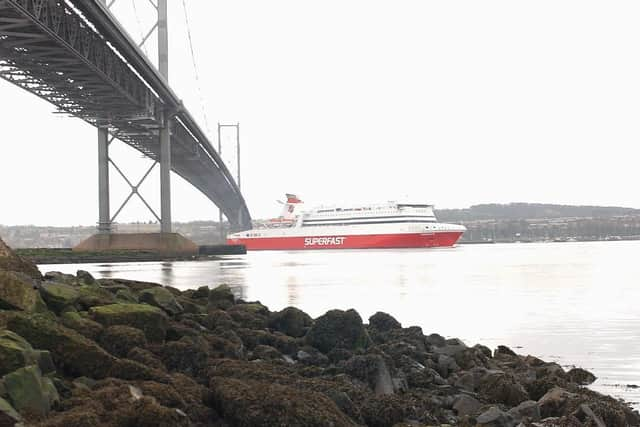
Greek operator Superfast launched the Rosyth-Zeebrugge route in 2002, but pulled out in 2008, blaming low passenger numbers and high fuel costs.
The route was revived the following year by Netherlands firm Norfolkline, but it stopped carrying passengers and became freight only at the end of 2010 after the company was taken over by DFDS.
The operator ended sailings in 2018 after it said it had “lost all hope” of making the route profitable, with the decision hastened by a fire aboard one of its ferries on the route which put it out of action for several months.
Comments
Want to join the conversation? Please or to comment on this article.