
The challenge to make ScotRail peak fares abolition succeed second time round
Higher price tickets at busy times to be scrapped permanently by ministers

Eight months ago, the £40 million trial suspension of ScotRail peak fares was ended because of its “limited degree of success”. Now they’ve been abolished for good.
Such is politics.
SNP ministers were widely criticised for scrapping the year-long experiment despite extending it twice in the hope of a greater uptake after extreme weather disruption followed by an industrial dispute hampered efforts to lure more commuters onto trains.
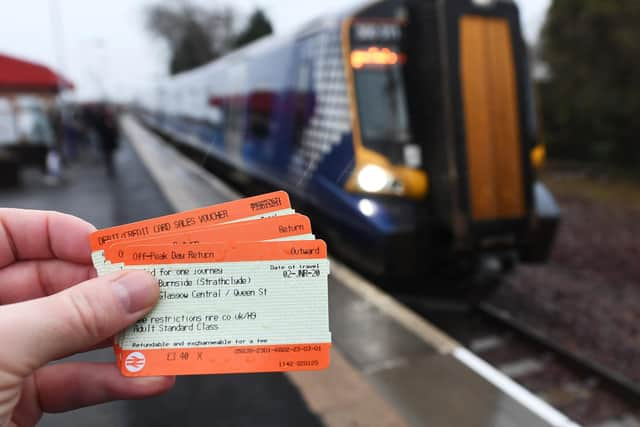

While the apparent U-turn on Tuesday received an equally widespread welcome, the Scottish Government will now have to make a greatly increased effort to ensure the policy succeeds so it doesn’t just end up subsidising existing passengers, many of them relatively affluent, as happened during the trial.
That will require a far more concerted publicity campaign - and the Programme for Government document has acknowledged that by stating that “a significant marketing programme will support the abolition”.
During the trial, advertising was initially scaled back because ScotRail feared there would be overcrowding. When it ended, peak fares shot up because one of the biggest annual fares increase for years, of 8.7 per cent, had been introduced while they were suspended.
However, the biggest argument in favour of abolition is the simplicity factor. Since the trial finished, I am probably not alone in having to remember when peak fares apply so I can plan my journeys to travel more cheaply.
Day trip fares confusion
That’s especially the case if you’re returning from a day trip between Edinburgh and Glasgow. As an infrequent passenger, I keep forgetting I would be charged more for travelling between around 4.30 and 6.30pm.
Not having to worry about such times after peak fares are scrapped on September 1 will make it so much easier.
If there was near universal approval for the move, a well-placed industry source said they were surprised and puzzled at the decision.
It does pose the question as to whether the £40m cost of the trial - from existing passengers paying less as well as the set-up costs - will reduce, how quickly, and whether the scheme will attract sufficient additional travellers for it to eventually pay for itself.
My informant questioned whether the money would be better spent increasing train frequency on poorly-served routes.
But if abolition is more successful second time around, might some trains need more carriages, at extra cost, especially as ScotRail’s fleet renewal plans are already years behind schedule.
Official analysis of the trial found it had “minimal impacts on overall car travel and has tended to benefit those on higher incomes within the Central Belt”.
Bus industry critical of move
The Confederation of Passenger Transport, which represents bus operators, who carry three quarters of public transport passengers, criticised abolition as it “appears to be a decision based on popularity rather than being the best use of limited funding to benefit the environment, help those in lower socio-economic groups or meet wider government policy objectives.”
However, Transport Scotland said “the focus will now shift to saving money/cost of living” rather than getting drivers to travel by rail instead.
No passenger will complain about saving money, but the potential wider cost remains to be seen.
Comments
Want to join the conversation? Please or to comment on this article.