
The luxurious Leith-built steam yachts owned by stars like Elizabeth Taylor
Edinburgh port was the “premier shipbuilding centre” for vessels which were the “pinnacle of private maritime luxury”

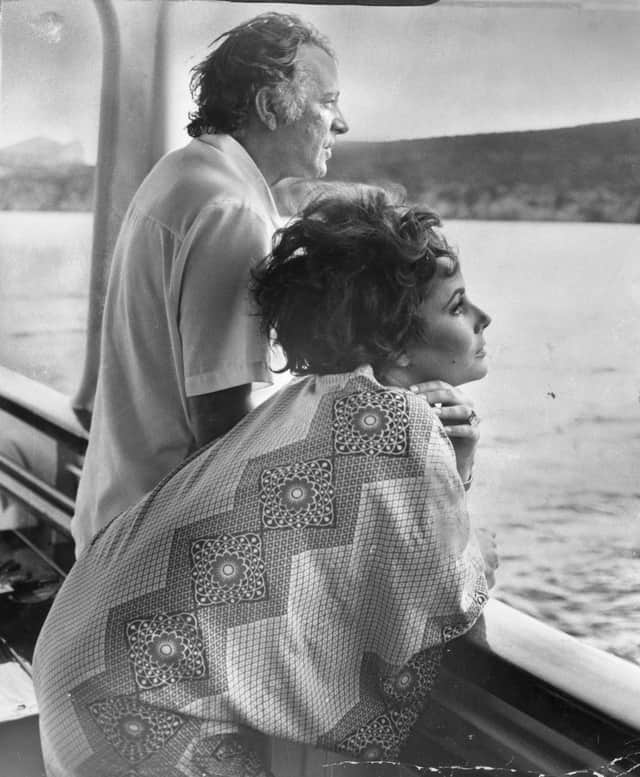
They were the private jets of their day, elegant craft enabling the likes of film stars Elizabeth Taylor and Richard Burton, newspaper publisher Joseph Pulitzer and pioneering engineer Guglielmo Marconi to cruise in the lap of luxury - and built in Leith.
Two shipyards in the Edinburgh port produced a total of nearly 100 steam yachts between 1875 and 1928, with the vessels also purchased by rich industrialists to flaunt their wealth.


The vessels boasted the latest technology of their day such as electricity and refrigeration. Some had added extravagances such a giant bath in which two people could lounge that was slung from a cabin ceiling in her yacht by socialite Lillie Langtree.
This forgotten aspect to Edinburgh’s maritime past has been highlighted in a new volume of former yard loftsman Ron Neish’s Leith-Built Ships series, who said it was the “premier shipbuilding centre for steam yachts”.
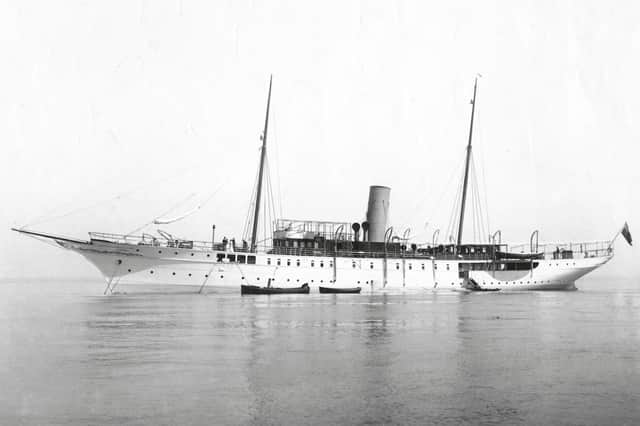
The author, who described himself as “Leith’s unofficial shipyard archivist”, said: “For over 50 years, Leith quietly turned out some of the most luxurious, extravagant, downright outrageous vessels.
“Not Glasgow, not Belfast, not the Tyne - it was Leith that was mass producing steam yachts, at which it excelled.”
However, Neish said one such vessel is thought to have survived. Minona, which was built in 1906 and bought by Burton as a gift for Taylor in 1967, who renamed it Kalizma after their children Kate, Liza and Maria.

He said: “It’s now owned by a multi-billionaire magnate and you can charter it for $100,000 (£75,000) a week.”
Neish said: “A typical steam yacht combined graceful lines borrowed from naval cruisers and luxurious interiors from stately homes, along with engineering muscle from merchant steamers.

“They were fast, elegant and expensive, with polished brass, teak decks and velvet saloons. The pinnacle of private maritime luxury.”
He said the steam yacht era had been ushered by technological advances, a new breed of the super rich and the Royal Family.
Steam engines became more reliable, dispensing with reliance on wind power, with steam yachts initially built to showcase the skills of Leith’s shipyards to win new orders for a variety of other vessels.
Neish said: “They were built for royalty, oil barons, aristocrats, industrialists and the occasional eccentric millionaire who simply wanted a floating palace to show off.
“Nothing said ‘I’ve made it’ like a private vessel with a crew of 40. They were technological marvels and a floating advertisement for wealth.
“The Royals set the trend. When Queen Victoria, and later Edward VII, had steam yachts, everyone else wanted one.
“Some bought them for show, while others embarked on round-the-world cruises.”
A total of 89 such vessels were built at the Ramage & Ferguson yard and ten at S&H Morton - later Hawthorn & Co - compared to some 140 between 37 yards on the Clyde.
However, Neish said by the 1920s, steam yachts were “fading fast” when diesel became cheaper, and several were converted into naval patrol vessels.
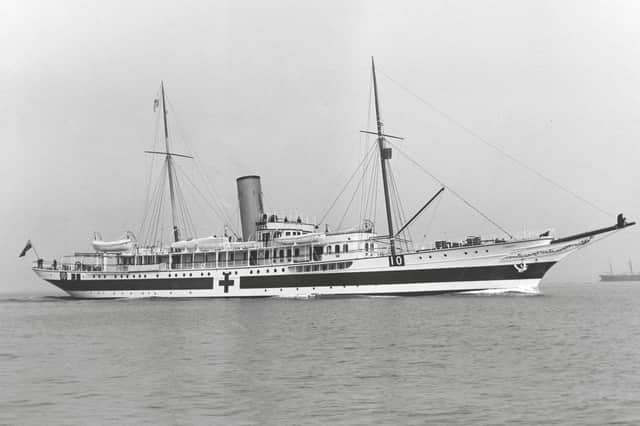
Liberty, built in 1907 for Pulitzer, whose bequest established the journalism prize, was used as a hospital ship during the First World War.
Neish said the vessel was built with soundproofing and virtually no square corners as Pulitzer had an extreme sensitivity to noise and was partially blind, making it perfect for its wartime use after his death on board in 1911.
He said: “All in all, an outrageous build from men who were paid pennies to produce work of the highest order.”
Other steam yacht owners included Marconi, who bought the 1904-built Rovenska in 1919 or 1920 and renamed it Elettra, adding a radio laboratory for his experiments.
Comments
Want to join the conversation? Please or to comment on this article.