
Why trying to control politics at the Winter Olympics is a no win

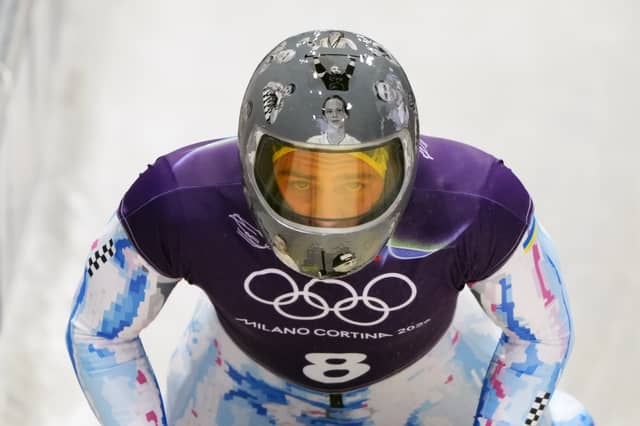

Ukraine’s Vladyslav Heraskevych at least has a medal of sorts.
I always love watching the Olympics, and Milano Cortina 2026 has been no exception.
Thousands of others like me are tuning in to see the spectacles, whether it’s gravity-defying feats in the air or the precision of the curling rink.
While we enjoy the sporting excellence on our screens, it is easy to forget the undercurrent of world politics.
I’m thinking particularly here of Ukraine’s Vladyslav Heraskevych, who was disqualified from competing after he tried to use his platform on the world stage to remind people of the horrors of war his country is still experiencing.
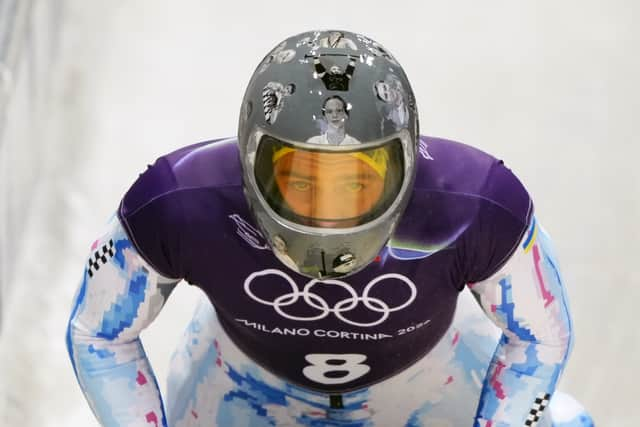
What was the sacrifice of an Olympic skeleton medal for? Wearing his ‘helmet of memory’, with the faces of some of the 600 Ukrainian athletes and coaches killed by the illegal Russian invasion of Ukraine on it.
This apparently goes against the International Olympic Committee’s (IOC) rules on political expression in the field of play.
There have been a lot of tears at this decision.
Lizzy Yarnold, who twice won Olympic gold in the skeleton for Great Britain, said she found the decision “shocking”, and said the IOC should apologise.
Even Kirsty Coventry, president of the IOC, was in tears and said: “No-one is disagreeing with the messaging.”
Ukrainians themselves are clearly on Mr Heraskevych’s side, particularly as he was their flag bearer at the opening ceremony.
President Volodymyr Zelensky said: “Sport shouldn’t mean amnesia, and the Olympic movement should help stop wars, not play into the hands of aggressors.
“Unfortunately, the decision of the IOC to disqualify Ukrainian skeleton racer Valdyslav Heraskevych says otherwise - no rule has been broken.

“We are proud of Vladyslav and of what he did. Having courage is worth more than any medal.”
Mr Zelensky has since awarded Mr Heraskevych the Order of Freedom, the highest civilian honour in Ukraine.
There has long been a history of athletes attempting to use the Olympics to stage such demonstrations, and as Mr Heraskevych pointed out, other athletes at Milano Cortina have displayed photographs of loved ones who have died.
Yet the IOC felt that allowing Mr Heraskevych to compete in his helmet would open the door to others doing similar, and at that point where do you draw the line?
When the world is in such turmoil, it is inevitable that politics will seep into the Olympics regardless of how much the officials try to control the narrative.

Just take the opening ceremony for example - the crowds booed the Israeli athletes and booed when US Vice-President JD Vance was on camera.
I am slightly apprehensive when people want global sporting events like the Olympics to be boycotted over politics, as I always think this ignores all the hard work and personal sacrifices the athletes have had to put in to get there.
But it seems that trying to clamp down on it once the athletes are there on the ground (or in this case, at the top of a skeleton track) has not been a popular decision.
The fans at large are not happy. The IOC is not happy. The athletes seen comforting Mr Heraskevych’s team are not happy. So who wins out of this?
Mr Heraskevych has come away with a medal of sorts from his own country out of this whole sorry tale - but certainly not the one he arrived in Italy hoping to leave with.
Comments
Want to join the conversation? Please or to comment on this article.