
How Dame Evelyn Glennie is teaching the world to listen
Winning an Ivor Novello Award is the latest achievement for the world’s premier solo percussionist who has blazed a trail in music and performance since losing her hearing as a child - and she’s not finished yet.
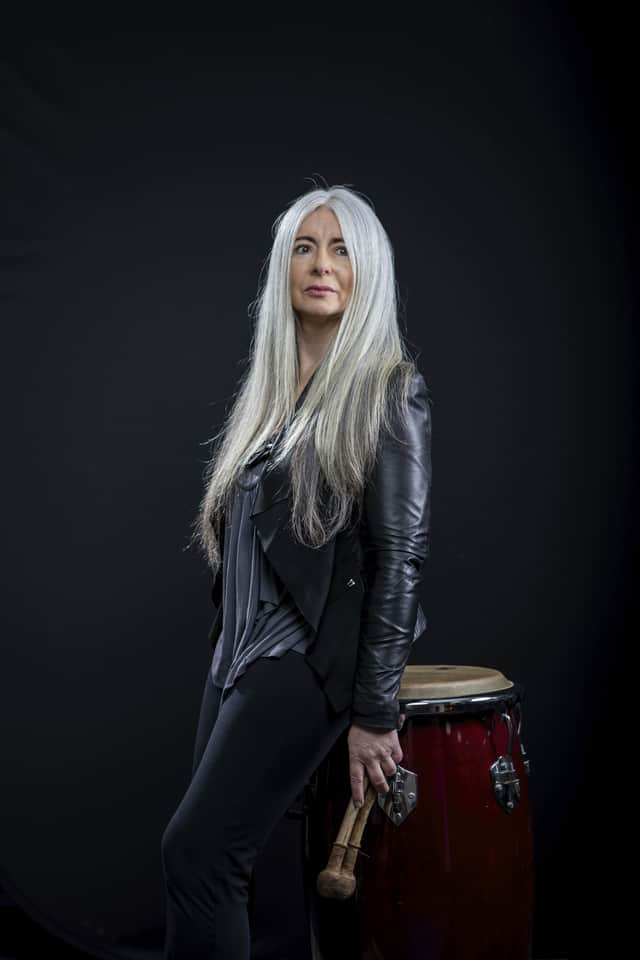
Dame Evelyn Glennie OBE, the world’s premier solo percussionist and composer, stands just five foot two in her bare feet - bare to feel musical vibrations through her body - yet is a colossus in the world of sound. Before her, solo percussion as a career path did not exist and she has gone on to break boundaries in music and performance, challenged conventions and changed the way we think about sound and the power of listening.
With her long silver hair and Aberdeenshire accent intact she’s a double GRAMMY winner, BAFTA nominee, recipient of the Polar Music Prize and has more than 100 international awards. She holds 29 honorary doctorates from UK universities and is Chancellor of Robert Gordon University. Performances include the London 2012 Olympic Games opening ceremony, regular BBC Proms appearance, she’s collaborated with artists across the worlds of pop, jazz, folk, classical and contemporary music including Björk, Mark Knopfler and Sting, has released more than 40 CDs, and her Ted Talk ‘How To Truly Listen’ has been viewed 2.6 million times.

The first full-time solo percussionist to establish an international career, by composing for film, TV, theatre and live performance, and commissioning over 200 new works, Glennie has broken out of the concert hall and into the mainstream. Her work can currently be heard in ITV’s TV series Code of Silence starring Rose Ayling-Ellis, for which she co-wrote the music with Dan Jones, and she’s fresh from performing with harpist Catrin Finch at Perth Theatre and Concert Hall.
What makes her achievements all the more remarkable is that Glennie has been what she describes as profoundly deaf since childhood after her hearing declined from the age of eight due to gradual nerve degeneration. Born in Methlick, Aberdeenshire and raised on a farm, already a pianist she began to play percussion at the age of 12 at Ellon Academy where a teacher taught her how to perceive sound and pitch as physical vibrations through her body and she went on to fight her way into The Royal Academy of Music in London at 16.
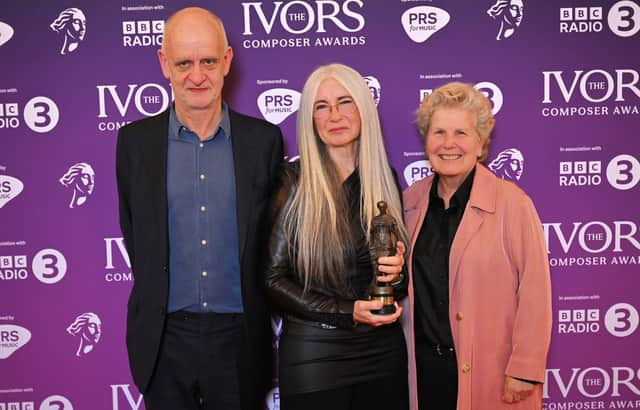
Now, at 61 she received an Ivor Novello Award for Outstanding Contribution to Music at The Ivors Composer Awards in London this week. A new ceremony celebrating excellence in British and Irish composing, it puts Glennie alongside the likes of composers such as James MacMillan, Stephen Sondheim, Anoushka Shankar, Brian Eno and Master of the King’s Music Errollyn Wallen, who was raised in Orkney.
It’s striking that with five decades of performance and international acclaim to celebrate, when asked about the snare drum that started it all for her at the age of 13, she simply reaches to one side and holds it up.
“This became like an extension of my limbs from about 13 to 16, when I left to go to the Royal Academy. And I have my first ever pair of drumsticks that came with the drum,” she says reaching out again. “Yes, that's a very special drum,”
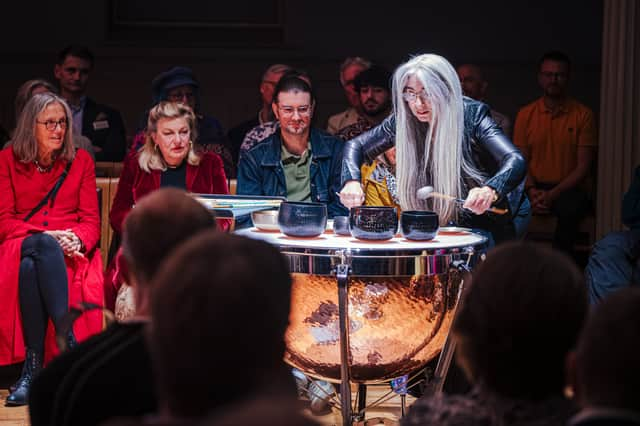
She’s at her base in Cambridgeshire where the drum and 3,800 other artifacts are part of The Evelyn Glennie Collection and which is also home to The Evelyn Glennie Foundation which she founded in 2023 to carry out her life-long mission to teach the world to listen.
“My parents bought it at the only music store in Aberdeen at the time, Bruce Miller’s, which mainly sold pianos and organs, and there was this single drum on a high shelf. My parents thought, OK, that will do, and that was my Christmas present. I had started playing in my first year at the Academy when I was 12 and I absolutely loved the snare drum. It seemed an obvious instrument to ask your parents for because things like xylophones and marimba, that was totally unheard of, individuals having those kinds of instruments. But a drum? That was possible.”
And she woke up the household by playing it in the mornings.
“Yes, I was always an early riser, as were my parents, being farmers, but I was up even before them and lo and behold, did they get an earful!”
Glennie didn’t see her life going the way it has, and as a child had a very different career path to world’s first solo percussionist planned out.
“As a little girl I always wanted to be a hairdresser,” she says. “I loved fiddling around with my cousins’ hair. But later I was prepared that if the music didn't work out, I would like to do something with animals. I absolutely loved the animals on the farm. It was sheep mainly and cattle, a couple of cows just for milk for the family and cheese and butter my mum would make. And the usual cats, dogs, rabbits. But it's all turned out so differently.”
The progression of Glennie’s hearing loss coincided with meeting a teacher who she credits with saying the most inspirational thing anyone’s ever said to her.
“My peripatetic percussion teacher at school, Ron Forbes said “please take your hearing aids off and place your hands on the wall”. And that was a revelation. It was like the sun rays came up from sound.
“He taught me that the body is like a big ear, like a resonator. From that moment I detected that sound isn't just the impact, there's the whole journey of sound thereafter, that we often miss, in a concert hall even. And that opened up choices for me. It changed my relationship with dynamics, my feeling of interpretation of a piece of music. I had much more of a relationship with slow tempos because not hearing something through the ear allowed me to be patient enough to continue to feel it through the body.
“So I felt I didn't need to fill in every aspect of every occasion that I didn't hear something. I had a new relationship with the sense of touch. It was just a complete and utter revelation.
“And it was that he listened to this young girl in the room, who he didn't know, and thought how to navigate the situation. He wasn't going to become hostage to thinking ’here's a pupil wearing a hearing aid, she can't hear this so let's not even bother’. He absolutely broke all of that down and used his initiative and gut reaction and said, ‘take the hearing aid off. Place your hands on the wall’, and he struck a timpani. ‘Can you feel it?’ That was it. That probably remains the one thought that runs through my mind almost on a daily basis. “Can you feel it?”
Glennie’s extraordinary career and numerous awards speak for her achievements but ask her why she thinks she has been chosen for the Novell Award and she is modest and laughs.
“No idea,” she says, but pressed, describes how she forged out a career as a solo percussionist and went on to establish it as something open to others.
“The career of the solo percussionists did not exist before so you're dependent on the composers to build up enough repertoire to sustain a career. For me, it wasn't just enough to sustain my career, but to make sure that for the next generation they can immediately start a solo career without having to wait two, three, four years for a piece to be written.
“I was commissioning pieces of music but meanwhile there was quite a period whereby I was still dependent on transcribing and arranging music to keep going as a solo player whilst new pieces were being written.
“Now people can immediately have that body of repertoire. And it's really important that any player continues with the commissioning and thankfully there's a wonderful pool of players from all over the world commissioning really good pieces and keeping that pot boiling.“
As we talk over Zoom (Glennie using a combination of closed captions where audio is simultaneously transcribed into text and lip-reading) before the Ivors Composer Awards she explains why the Novello award, judged by other composers, is ‘very special indeed’.
“I’m very surprised, and I think with any type of recognition it allows you to stop and reflect on where you are and how that sits with what you're planning for the future and to reflect on the journey as a whole. I'm very delighted that they even thought about me because there are so many people who do extraordinary things in the world of music.
“It'll be very lovely to share the ceremony with so many other composers, many of them I may have worked with before or commissioned pieces from, media composers or composers for the concert platform or for gaming and areas I've ventured into over the years.”
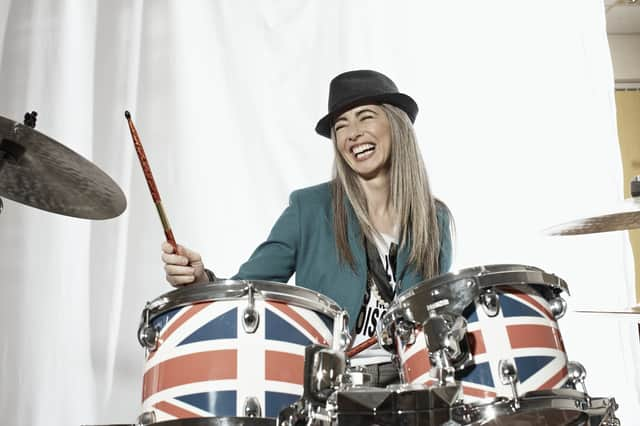
Glennie is famous for playing barefoot, when did that start?
“I don't know. I think it was just a natural progression. As a student I might have discovered that it was like a security blanket, to feel the sound a lot more, because it comes up from your feet, especially if you're playing instruments that have low frequencies and are really sustained, like timpani or the low end of the marimba or bass drums.
“Also in those days a lot of the instruments were not height adjustable and sometimes really low, so taking your shoes off was handy. But on the whole, it was to get more of the sound.”
Does she still do that?
“Most of the time. But if you're in an outdoor venue, have a trip through mud or are playing on cold stone in a cathedral, you might wear socks.” She smiles.
Listening and what it means is something Glennie is better informed on than most and passionate about and we return to the subject of her Foundation and Collection, both of which she is passionate about.
“The Evelyn Glennie Foundation’s mission is to teach the world to listen,” she says, stressing that this is not the same as how to listen, and that it is not a music foundation.
“We work in all different kinds of landscapes and disciplines: business, sport, health, education, music, and in different situations, from prison work to going into a Methodist congregation, businesses, offices, doing outreach, whatever the thing about listening is.”
“In partnership with an organisation called Cities and Memory we put out a call asking: ‘what does listening mean to you?’”
The response was hundreds of submissions, from artwork to soundscapes to pieces of music, prose, poetry, a listening app, photographs, answering that question.
“People were thinking about listening in the climate, about listening and relationships, human to human communication, about listening and the future, listening and health, their own well-being and physical health, about different aspects of listening that were resonating with them and it was fascinating. Our project is called Ways of Listening, based on that one question and our first live events are in January and February in Oxford and London.”
The Foundation also has an Art of Listening exhibition in partnership with the Royal College of Music Museum that will run from June to November next year.
“The Foundation and its mission is an extension to my whole career as a musician,” she says.
“Listening is potentially the greatest gift we can give and receive. Hence why The Foundation is really important to me. And also The Collection,” she says, referring to the vast archive of more than 3,800 instruments, stage costumes, scores, printed and audio interviews, posters, artwork, images broadcasts, magazines, newspapers, photographs, touring schedules, lists of tour instruments, correspondence, contracts - all summed up by Glennie as “all those things that tell a story, anything to do with the journey”. A journey stretching back five decades to Aberdeenshire and spanning the globe.
“We are building up an in-house prototype database for people to eventually use the collection for research or simply enjoy, because it is so huge. The instruments are the most obvious because you can immediately see them, but there's an archive room we've had a wonderful pool of volunteers concentrate on for the past ten years. And because it's a living collection, it's always growing - new instruments, inventions, new scores and the commissioning goes on. Even once I'm long gone, the idea is for the collection to continue to grow.”
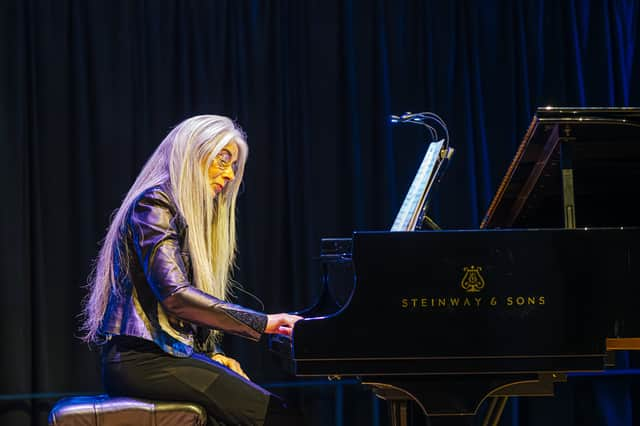
Glennie and her curators are currently working out how to collate and archive digital material, consulting with various museums and collections such as St Cecilia's in Edinburgh, the Albert Hall Museum and The Royal College of Music Museum to push boundaries of what a collection looks like in the future .
“It's a great resource for any musician, but also people interested in geography, manufacturing and design, the physics of sound and social history.
“That's something I'm very passionate about, because it can be of real interest to people moving forward.”
“It doesn't stop with percussion. Hence The Evelyn Glennie Foundation and The Evelyn Glennie Collection are really important to me. Those are two aspects that will continue long after I'm gone and it's really important for me to find space and time to nurture.”
If Glennie could have her hearing restored, is that something she would consider?
“This is perhaps simplifying things, you know, ‘having hearing restored’. It's very possible to restore hearing or blindness but to whose level of restoration? So it's not something I would consider, no, not at this point in my life. It’s something I’ve thought a lot about, but restoring is not the perfect scenario we think it is. So, no, I will continue my life as I am.”
What does listening mean to her?
“I feel the first step is interrogation, thinking what is my immediate listening environment? Almost have a listening spring clean. How can I get rid of anything I do not need to be listening to? In my home or workplace it could be a TV that doesn't need to be there, a computer that doesn't need to be on as much, or extra sounds that are not needed.
“This allows more space for us to listen to ourselves. Also to think each day, how has real listening impacted something I've done? It could be how you've communicated with somebody or put your attention to something.
“Listening isn't always about relating it to a sound, It could be listening with something, for something, to something. It's really thinking, ‘have I felt listened to today and how has that changed what could have been?’”
“I went to the Royal School for the Deaf in Derby recently and 90%, if not 99%, of the kids have cochlear implants and I asked the teenagers ‘what does listening mean to you?’ Without any hesitation, they said, ‘feeling’.
If she had one word to describe what listening means to her, what would it be?
“Connection. That could be with ourselves, with something we do, with a thought, with others. It can be connection with nature, animals, climate, with every demographic, with learning, with being curious, with letting your imagination go, exploring another element of a piece of music, or being vocal on a project.
“It it all starts with listening. It really does.”
Want the latest Scottish headlines sent directly to your phone? Sign up to our WhatsApp Channel