
Scottish medical teams gift time and talent for sight-saving surgery abroad


In the foothills of Nepal, the jungles of Belize and in rural Ethiopia, a team of Scottish medics are transforming lives.
Consultant ophthalmologist and vitreoretinal surgeon Zac Koshy and his fellow doctors, nurses and trainees run international outreach clinics and surgery in their own time.
As well as giving people back the gift of sight, the programme is also a valuable way of giving NHS trainees an incredible insight into working in challenging conditions, and putting their skills and talents to altruistic use for their fellow man.
Dr Koshy, who is based at NHS Ayrshire and Arran and the Golden Jubilee National Hospital in Clydebank, also works for Vision Scotland, a private medical practice with an ethos of giving back.
And making a difference is why Dr Koshy and his colleagues sacrifice up to three weeks of their annual leave every year.
I just feel I am very fortunate to be in the situation where I have the facility, training and experience to do things
Dr Koshy trained in medicine with the Indian Armed Forces in the 1990s, before beginning his ophthalmic training at Aravind Eye Hospital and then moving to Glasgow to finish his training at the Tennent’s Institute. He became an NHS consultant in 2006, and in his day job devotes his time to helping people retain or regain their sight.
And while that work is truly transformative, the work done in outreach programmes, often run as temporary clinics in school classrooms or village halls in remote and poverty-stricken parts of the world, is on a another level.
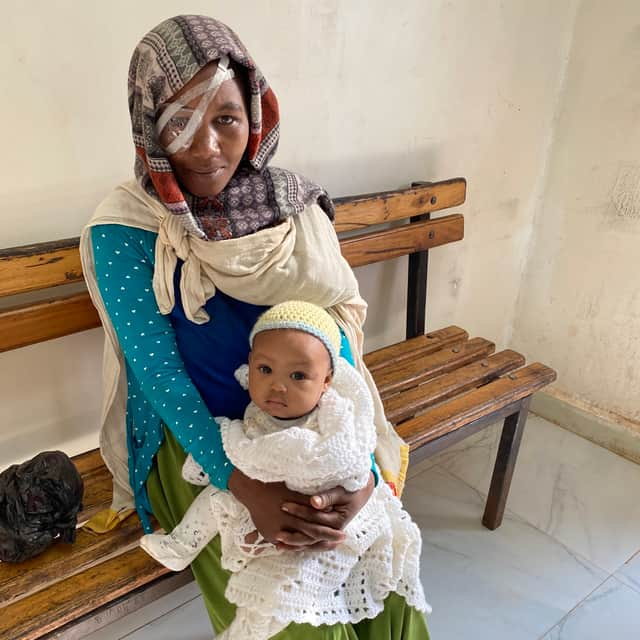
“In Belize” he says “where there are no retinal surgeons at all, we focus on helping often younger people who have diabetic retinal problems. By giving them back their sight they can work again, and provide for themselves and their families.”
In Nepal they concentrate their efforts in the high altitude hamlets where people don’t have access to routine medical care, and where cataract surgery not only gifts the often elderly patient back their own sight, but frees up their children and grandchildren from 24/7 caring responsibilities.
“A simple surgery can be life-changing for the entire family.”
But perhaps the most memorable transformation of all was in Ethiopia, where a 12-year-old girl was blinded by milky cataracts in both of her eyes.
She agreed to have her eyes operated on, one day apart, under local anaesthetic, with her dad by her side keeping her calm throughout the delicate procedures.
Dr Koshy said: “She was such a pretty girl, but was sullen and withdrawn. Post-surgery she became happy and playful, and it was delightful to see.”
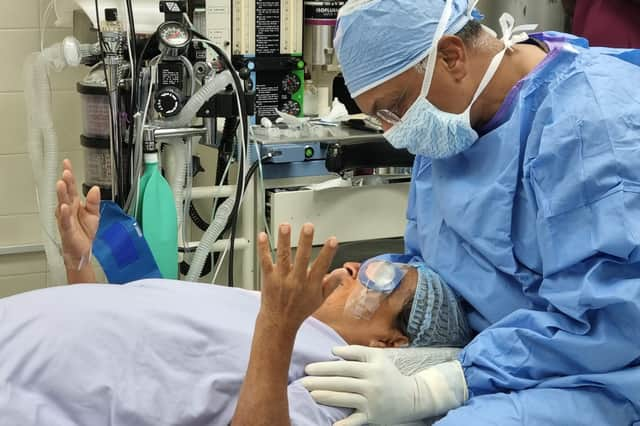
The surgeon is not alone in carrying out volunteer work abroad. Many of his NHS and Vision Scotland colleagues travel with him, giving up their valuable time. They’ve also raised money to donate equipment to the medical teams in each area, to continue helping people.
“Another big benefit is training; we not only help train people there, but we take our staff and trainees who benefit from learning to work efficiently with limited resources.”
His only regret is he cannot commit more time to volunteering, but he is hoping to recruit more medics from America to help the charity in Belize, where the diabetic patients need ongoing care, rather than one-off surgery.

Dr Koshy volunteers primarily with Fiona’s Eye Fund, named in memory of a colleague he trained with in Glasgow, and the Belize Council for the Visually Impaired . Vision Scotland’s own charitable work includes its own Sight Saving Fund which gifts private surgery to those in need, and its training programme. It is the largest training body for optometrists in Scotland, and gives all of its education service at no charge.
Speaking of his urge to help, and to encourage others to do so, Dr Koshy added: “A lot of it stems from my exposure to the charities I work with and my training in Aravind Hospital, whose pioneering and efficient outreach model is used all over the world. It is a privilege to work for people who do not have access to what we have.”