
Finn Russell is Scotland’s driving force but this is chance to see how attack functions without him
I’d like to see Tom Jordan given a chance at 10

Scotland will make changes for Saturday's final home Nations Championship game against Japan, and I think this is the perfect opportunity to find out how their attack functions without Finn Russell.
Russell has been the driving force behind Scotland's attack for more than a decade, but he's not always going to be available. What happens if Scotland go into a Six Nations or World Cup without him? Who can take control of the attack, and how much would Scotland have to change the way they play?
They're important questions, and Saturday presents an opportunity to start answering them.
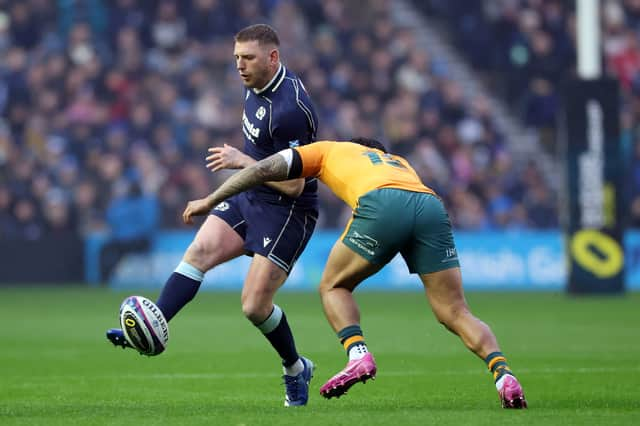

Russell hasn't been at his best against New Zealand or Australia, and I think he'd benefit from a week off ahead of Finals Weekend at Twickenham.
He's been searching for form this season. If you've watched Bath, he hasn't consistently reached the incredibly high standards we've come to expect from him.
How effectively can Scotland backline function without Finn Russell and Sione Tuipulotu?
The bigger concern is how dependent Scotland are on him, particularly when Sione Tuipulotu isn't available either.
When they're both firing, Scotland can be incredibly difficult to defend against. But when Russell isn't at his best and Tuipulotu isn't there to provide that additional playmaking threat at 12, how effectively can the rest of the backline function?
Fergus Burke's injury has complicated things because I would have liked to see him start against Japan.
I think he is a more natural fly-half than Tom Jordan, but with Burke ruled out, Townsend has a decision to make. Does he continue with Russell or give Jordan an opportunity to run the attack? I'd go with Jordan. He's an outstanding footballer, aggressive, skilful and incredibly versatile, although I'm not convinced he's a specialist international ten.
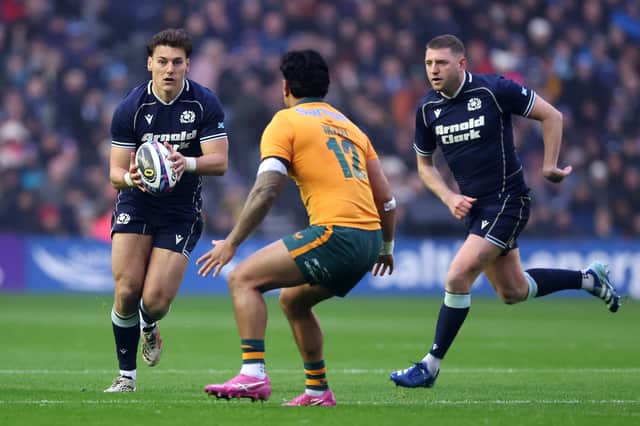
Jordan played plenty of rugby at fly-half for Glasgow and covered AJ McGinty's absence at Bristol last season. But this season he's largely played at full-back, and he started at inside centre against Australia on Sunday. He can certainly do a job at ten, but if Scotland want to win a Six Nations or compete at a World Cup, they need to establish whether he can genuinely control a game at that level. And the only way to find out is to give him the opportunity.
Japan will attack at pace and with width
Whoever starts will need to find their rhythm quickly because Japan will attack Scotland at pace. They'll want quick breakdowns, plenty of width and opportunities to move the ball into space before Scotland can organise their defensive line. They'll look at how New Zealand attacked Scotland in the second half at Murrayfield. When teams generate quick ball, challenge Scotland through the midfield and move possession towards the edges, opportunities appear.
Scotland are much more comfortable defensively when the opposition's attack is slow and predictable. We saw that against Australia, when Scotland dominated collisions and prevented the Wallabies generating momentum. Japan will want to avoid that type of game. Eddie Jones' side endured a dreadful afternoon at Twickenham, losing 78-15 to England, who deserve enormous credit for their performance. Japan couldn't establish any physical presence, and the 20-minute red card shown to Harry Hockings following an incident in the opening minute made an already difficult task considerably harder.
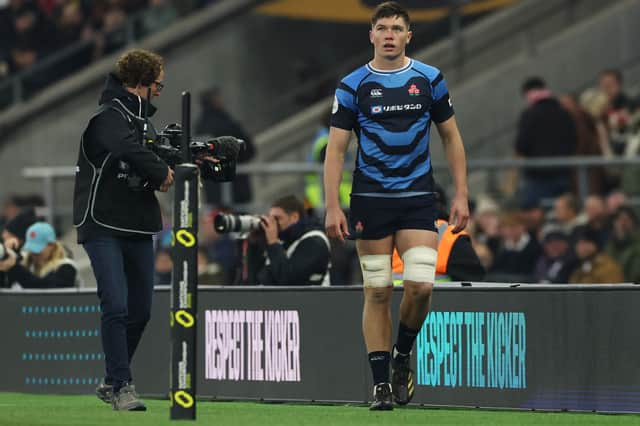
England scored 32 points inside 20 minutes and the game was effectively over. Japan were inaccurate, physically overwhelmed and looked shell-shocked. I expect them to be better at Murrayfield, though, and that creates a dilemma for Gregor Townsend.
Time for Jamie Dobie and Rory Hutchinson
He'll want to experiment with different combinations, but Scotland still have to win. There's a balance between building depth and making so many changes that you lose the connections within the team.
With Ben White ruled out through injury, I'd start Jamie Dobie at nine ahead of George Horne. Dobie has played a lot of Test rugby over the last 12 months, but very little at scrum-half. He's been excellent on the wing, but ultimately, nine is his natural position. He's comfortable switching between the two roles, knows the systems incredibly well and has the ability to bring real tempo to Scotland's attack.
There are positions where Scotland can make changes without significantly weakening the team, and I think Dobie falls into that category. So does Rory Hutchinson, who I'd like to see given an opportunity at outside centre.
Huw Jones is an outstanding attacking player, but the conditions and nature of Sunday's game against Australia didn't really suit his strengths. Hutchinson offers something different. He's an excellent distributor with great hands who can bring the players around him into the game. I've spoken before about Scotland's reliance on Russell to create attacking opportunities, and another genuine playmaker at 13 could ease some of that responsibility.
Josh McKay is quick, powerful and a specialist full-back
Josh McKay is another player I'd bring straight into the team now that he's completed his five-year residency requirement.
I really like McKay. He's quick, powerful and a genuine specialist full-back. He's excellent defensively, good under the high ball and offers a real counter-attacking threat. What impresses me most is his consistency. He's a very tidy footballer who rarely makes mistakes and performs at a high level almost every week for Glasgow. I'd start him against Japan and give him the opportunity to settle into international rugby.
Whether McKay imagined representing Scotland when he arrived from New Zealand in 2021, I don't know. But he's embraced life here, worked incredibly hard and become an important player for Glasgow.
There will be changes in the pack as well, and the second row is particularly interesting.
What are we going to learn by selecting Grant Gilchrist or Jonny Gray?
Scott Cummings has been ruled out through injury, while Grant Gilchrist has been called into the squad and Jonny Gray is another experienced option.
Both are excellent players who have given Scotland an enormous amount over the years. But my question is, what are we going to learn by selecting either of them against Japan? We know their strengths, what they're capable of and that they can perform at international level.
With the World Cup less than a year away, surely this is an opportunity to give younger second rows meaningful experience rather than continually returning to established players.
Max Williamson was excellent against Australia and I'd like to see him start. Gregor Brown is developing into an important player for Scotland, while Cam Henderson has been brought into the squad and could benefit enormously from more Test rugby.
I'm not suggesting Gilchrist or Gray don't have a role going forward. Their experience could be hugely valuable in big matches where Scotland need leadership and composure.
Freddy Douglas is an interesting option at seven
But we have to establish whether the younger players can perform consistently at this level. Japan at Murrayfield provides the perfect opportunity.
It's a similar situation in the back row. Rory Darge was outstanding against Australia and deserved his player-of-the-match award. He's become such an important player that I'd be inclined to rest him ahead of Twickenham.
Freddy Douglas is an interesting option at seven. His breakdown ability is exceptional, although he's still developing other areas of his game. I'd like to see him given meaningful minutes against Japan.
I'd also like Scotland to find a way of giving another tighthead proper game time.
Zander Fagerson is hugely important, but Scotland need alternatives. Do they start him and make a planned substitution after 50 minutes, regardless of the score? Or give someone else that responsibility from the beginning?
These decisions aren't straightforward. You want players to develop, but can't make so many changes that the team's performance suffers.
What Scotland really need on Saturday is a barnstorming performance that puts Japan away early. They've had a tendency to allow lower-ranked opposition to stay in games for 45 or 50 minutes before eventually pulling away.
I'd like to see them start aggressively, build a significant lead and then demonstrate they can manage the final 20 or 30 minutes without allowing the opposition back into the game. And that's particularly important given some of the defensive concerns we've seen this autumn.
Scotland’s defensive concerns remain
I raised questions about Scotland's defence before and after the New Zealand game, and I'm not convinced they were answered by Sunday's victory over Australia.
Scotland were brilliantly physical against the Wallabies. Their collision work was excellent, they were aggressive around the breakdown and made Australia work incredibly hard for everything. But they weren't put under the same defensive pressure they faced against New Zealand. On the occasions Australia did stretch Scotland, they found opportunities.
Russell missed a tackle in the build-up to Australia's first try, but the bigger issue was how easily the Wallabies exploited space on Scotland's edge. From that position, Scotland should never have conceded. Australia also scored late in the game, reinforcing the concern.
It was a gritty, physical defensive performance, but Scotland weren't consistently challenged by quick ball and width. That's where I still think they're vulnerable. Japan will test those areas, and that's what makes Saturday interesting.
Scotland should have too much quality for them, but I'd like to see more than a comfortable victory. I want to see different combinations functioning effectively, Jordan taking responsibility for the attack and younger players showing they can step into the team and perform at Test level.
Ultimately, that's what developing genuine squad depth is about. It's not simply giving players caps. It's establishing whether they can maintain the standards when Scotland's most influential players aren't available.
With a World Cup approaching, Scotland need those answers sooner rather than later.
Comments
Want to join the conversation? Please or to comment on this article.