
Where Scotland can hurt New Zealand - but beware Dave Rennie's secret ingredients
Scotland must produce a front-five performance close to the one that rocked South Africa

Scotland versus New Zealand is always a special game and Gregor Townsend’s team should go into Saturday’s match at Murrayfield with real belief after their performance against South Africa in the summer.
The Springboks came out on top 42-28, but it was a match Scotland could and should have won.
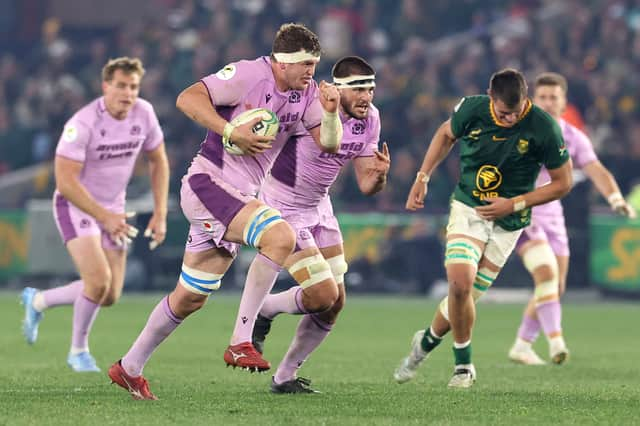
Scotland outplayed South Africa for long periods, which should give them huge confidence heading into this weekend. But it was the manner of that performance that was most impressive. They didn't get the better of the Boks by trying to run around them or avoid their physicality. They went straight at them, took them on up front and matched them in the areas where South Africa are traditionally so dominant. Scotland should take massive belief from that.

Their aggression and speed around the breakdown allowed them to get on top of one of the best defences in the world. There were periods at Loftus Versfeld when South Africa simply couldn't live with Scotland's pace and power.
Against South Africa, Scotland’s front five were outstanding
When we look back on good Scotland performances, we're more accustomed to talking about their attacking game and the speed and skill of the backline and midfield in particular. Against South Africa, it was the forwards, especially the front five, who stood out against arguably the best pack in the world.
That's a good template for facing the All Blacks. If Scotland can generate that tempo again and get their front five into the game, they'll cause problems. As good as New Zealand are in attack, there are some big holes in their defence.
The All Blacks are missing several key players after a gruelling sequence of games. Remember, they're coming to Scotland on the back of four Tests against South Africa and two against Australia.
There's still unbelievable depth in their squad, but it could be tested in the front five. They've got some outstanding athletes, but technically they're not the strongest group of forwards. I think Scotland will target that area, looking to gain ascendancy at set-piece and put New Zealand under pressure.
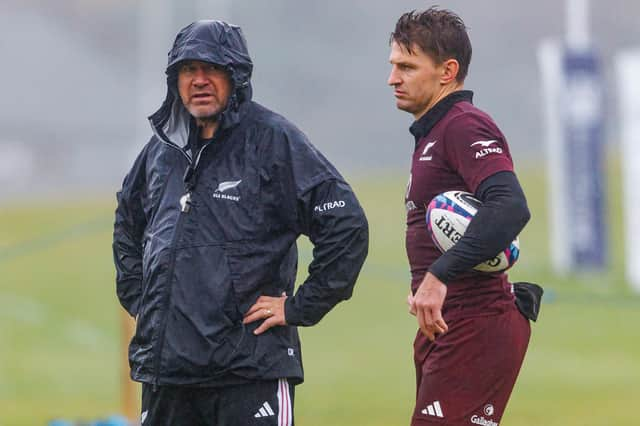
While there may be opportunities for Scotland up front, there's no question that New Zealand have become a different attacking proposition under Dave Rennie.
Dave Rennie’s impact on the All Blacks
He's a coach I know well from his time at Glasgow Warriors, and one of his biggest strengths is building a winning culture.
He transformed the Chiefs from a team with plenty of talent but limited success into a winning province, and had a similar impact at Glasgow.
He placed huge emphasis on culture, community and how those connected to our rugby. He's now doing the same with New Zealand, who have rediscovered their traditional All Blacks identity under Dave.
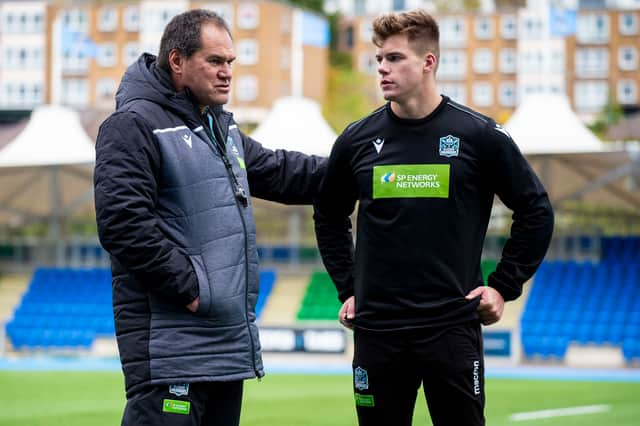
When Dave arrived at Glasgow in 2017, replacing Gregor, we were already one of the best attacking sides in the league. But one of the first things he told us was that we were too pragmatic. That was quite a statement, but he wanted more. He wanted us to develop the skills and confidence to score from anywhere on the pitch, even 100 metres out.
I think back to some of those games, particularly a European tie against Exeter at Scotstoun, when Glasgow scored some of the best attacking tries I've seen in European rugby.
That summed up his mindset. His philosophy was that we could attack from anywhere if there was space. He placed a massive emphasis on identifying space, communicating accurately and clearly, and making the right decision to play or not depending on the information in front of us. He also encouraged every player to be highly skilled and a decision maker, not just the usual game drivers.
Rennie’s focus was on skill execution
That's exactly what we're seeing with the All Blacks now. Their skill sets are excellent because Dave places such importance on the ability to retain possession and execute. Whether an opportunity comes after one phase or 21, he wants all of his players to have the skills to take it.
We did loads of passing under Gregor, and you can see how skilful his teams are. But when Dave arrived, he started talking about basketball passes, creative passes, catch/pass in mid air or off one step. There was a focus on skill execution under pressure and the ability to keep the ball alive using unconventional ways of passing explaining that they were just as important as conventional passing skills.
Dave wants players to have a full range of skills, and that's evident in this All Blacks team. They're immensely skilful and need to be because of how frequently they move the ball from one side of the pitch to the other.
Under Scott Robertson, New Zealand were far more limited in their attacking phase play. Under Rennie, they want more possession, more touches and more opportunities to attack. They're willing to play from anywhere, move the ball across the pitch and keep probing until they find a weakness. That demands an extraordinary level of skill, but it's exactly what Dave has always wanted from his teams.
Alongside that is a massive emphasis on brutality at the breakdown. When Dave was at Glasgow, he used the word brutality almost every time he spoke about the contact area.
He demands physicality, explosiveness and power, and you can see that in how New Zealand play.
Scotland will have to cope with that, and I think they can. There are some powerful athletes in this Scotland squad, some excellent rugby players and an abundance of attacking talent.
I still have concerns about Scotland defensively
Defensively, though, I still have concerns. I don't think Lee Radford has quite found exactly what he's looking for since replacing Steve Tandy last year. Scotland are yet to have a statement defensive performance but they will need one to win this weekend.
They'll need to be at their absolute best defensively because New Zealand will keep probing. At Test level, it's not necessarily a missed tackle or a big defensive error that costs you. Sometimes it's just one passive collision. That gives the opposition momentum, puts them on the front foot and suddenly you're defending on the back foot against some of the most dangerous athletes in the world. That's the difference at Test level. One or two collisions lacking the required intensity can ultimately be the difference between winning and losing.
I expect Townsend to select his team along familiar lines, although there are one or two key positions to consider.
The front row is likely to be Pierre Schoeman, Ewan Ashman and Zander Fagerson, with Matt Fagerson, Rory Darge and Jack Dempsey in the back row.
The second row is less certain. Scott Cummings is a starter, but who partners him?
Gregor Brown in pole position
Grant Gilchrist has been his long-term partner but has only just returned from injury and isn't in the squad. Jonny Gray is another option, but I think Scotland will go with Gregor Brown at lock.
He's not the tallest, but he gets through an enormous amount of work and Scotland have some excellent back-row lineout options to compensate. It's also the combination that performed so well against South Africa in the summer.
Ball security will be crucial against New Zealand. Scotland simply can't afford to turn over possession and give the All Blacks repeated opportunities. Gregor Brown's breakdown work, particularly his speed and security when carrying, is excellent. He's one of the best at Glasgow and one of the best in Scotland.
He and Scott were both outstanding against South Africa in the summer.
Huw Jones or Rory Hutchinson?
Outside centre presents another dilemma, with Huw Jones and Rory Hutchinson competing to partner Sione Tuipulotu.
Huw and Sione obviously have a great understanding, having played together for years with Glasgow and Scotland. Huw has only recently returned from injury but has looked good in his last couple of games.
Hutch has been incredible. I've watched a lot of Northampton Saints this season, and he's been excellent for several years now.
On form, I'd start Hutch at 13. But if selection comes down to connections and familiarity, Huw probably gets the nod.
On the wings, I'd go with Kyle Steyn and Jamie Dobie. Duhan and Darcy are only just returning from injury and, defensively, I'd favour the Glasgow pair. Their ability in the air is excellent too.
As much as I hope I'm wrong, I do think New Zealand will win.
I’m expecting a brilliant game at Murrayfield this weekend. The attacking talent, the attacking mindset of both teams means there will be tries scored. If Scotland are to be more than competitive, then they need to put the All Blacks under pressure, particularly up front. They will need to stop New Zealand at source, don’t give them clean ball and limit their opportunities from turnover. If they can reproduce the physicality and tempo they showed against South Africa, they'll cause New Zealand problems.
My concern is whether Scotland can sustain that intensity defensively for 80 minutes. New Zealand will keep coming at them, retaining possession and testing their defensive organisation until they find a weakness.
I think it'll be close for much of the game, but my fear is that New Zealand's ability to sustain that pressure will eventually tell. The final 15 or 20 minutes could be where they stretch the lead and pull away.
Comments
Want to join the conversation? Please or to comment on this article.