
The sunny shores of Sri Lanka


Kate Wickers enjoys a taste of paradise by the Indian Ocean... and doesn’t want to leave.
Mischievous torque macaques are diverting my attention from Sri Lanka’s two-millennia-old Mulkirigala rock temples, tucked within forest, some 16km inland from the laid back, southern coastal town of Tangalle.
They hang around the stupas and shrines waiting for devotees to leave offerings of flowers, then treat the altars like an all you can eat buffet. The Buddhist pilgrims don’t seem to mind, smiling, as much as I am, at the cheeky monkey antics. Six decorative caves, containing a riot of beautiful frescoes and large reclining 18th century buddha statues, are located at various levels on a sweaty, 500-step climb to the top of the rock.
From the summit, where I find a small white stupa, around which devotees sit to recite prayers, the views are epic, over densely thick, coconut-palmed, lush forest all the way to the Indian Ocean.
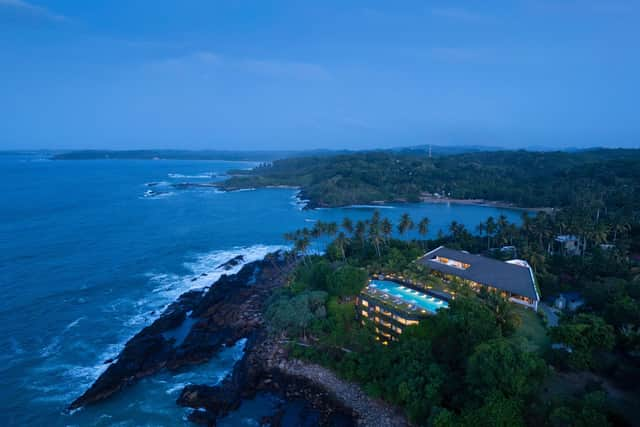
Bordered by idyllic countryside, awash with luscious green rice paddies, where water buffalo roam and little egrets wade, Tangalle sits lashed by surf-worthy waves, that rarely settle down. Nesting turtles take their chances, swimming ashore to the vast, wild beaches of Marakolliya and Rekawa to lay their eggs, but for tourists with young kids, looking for calm swimming water, it is perhaps best to head west. For those in search of dramatic seascapes and picture-perfect, palm fringed beaches, Tangalle is hard to beat.
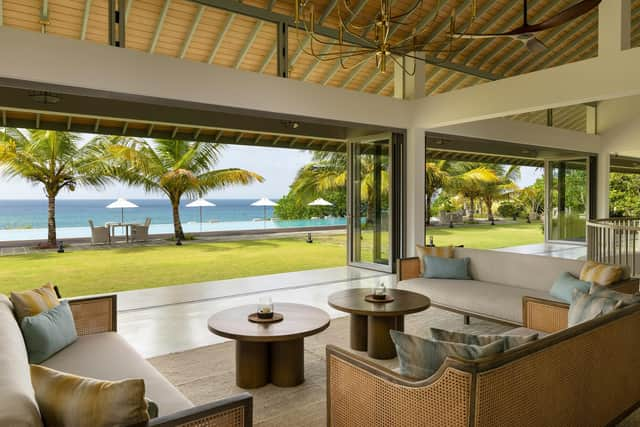
It’s early September when I visit, the beginning of low season and the tail end of monsoon, yet my days are filled with sunshine. I’m staying at Uga Prāva, a boutique retreat of seven suites, that opened last year as a game changer for the town in terms of design. Everything about my modern Coral Suite (think a coastal colour scheme of sandy browns and marine blues) is an invitation to relax.
The living area opens on to a large terrace, from which I can watch the Indian Ocean crash spectacularly and relentlessly and is my lullaby to sleep. A path leads through palm-studded gardens to Silent Beach, a stretch of pristine sand that many argue is the south coast’s most beautiful, where I find just a couple of no-frills beach bars that serve fresh juices and king coconuts (simply slice off the top and pop in a straw).
A docile stray mutt adopts me as I walk sands strewn with moon nauticals, whelks and speckled cowrie shells, the domain of cartoon-like sand bubbler crabs. I take a tuk-tuk tour of the town (for a driver and tuk-tuk for two hours the charge is just £4), stopping at the the fresh produce market, where veg is weighed on antique scales and I’m invited to taste and smell all I show interest in.
My knowledge of local vegetables is sorely tested among the piles of snake neck gourds and soursop, a soft, spiky, green fruit with a sweet-sour flavour. At the fish market, stalls are piled high with pink squid and red snapper, glistening mackerel and tuna. “Where are you from? Where are you going? Do you like Sri Lanka?” are the friendly questions fired my way from rubber-booted mongers (they don’t call this country the land of smiles for nothing).
The main beach of Medaketiya is the place for budget lodgings and low-key bars and restaurants, where I drink a banana smoothie and watch fishermen hand-haul nets from the ocean.
Twelve miles west of town, I take a morning stroll along the picture-perfect sands of Talalla beach, barely touched by tourism, then continue another three miles to the Dondra lighthouse, at Sri Lanka’s most southerly point. Built in 1923 by the British to commemorate Queen Victoria’s Diamond Jubilee, the palm-filled grounds of this soaring beacon are home to Indian palm squirrels and peacocks. From here, you can gaze south to Antarctica, some 8000km away.
Back at Uga Prāva, during an al fresco yoga class, I’m invited to switch off and tune into my environment: crashing waves, bird chatter, the smell of freshly roasted paan (a crunchy flatbread with a hint of coconut) wafting from the kitchen. However, it’s to the hotel’s 41-metre-long infinity pool that I lose the most time.
Bordered by frangipani trees, I watch tiny pale-billed flowerpeckers and Asian green bee-eaters flit from branch to branch, as I float on my back and make plans to never leave.
At sundown, I drink an Arrack Sour, made with the country’s favourite liquor arrack (the fermented juice of the coconut flower), coconut treacle, cardamon, and egg white. With a farm and sea to table philosophy, and an emphasis on traditional Sri Lankan flavour, I get a taste for spicy omelette at breakfast, made with green chillis, and for dinner it’s the likes of prawn curry with hopper (a bowl-shaped pancake made with rice flour), and mahi-mahi cooked in banana leaves that star, especially when enjoyed under a pitch-black, star-speckled sky that stretches, light pollution-free, all the way to the South Pole.
Suites at Uga Prāva start at £349 on half board basis, www.ugaresorts.com Kate’s stay was part of a tour with Sri Lanka experts, Red Dot Tours. From £2,540 per person for a 10-day Simply Sri Lanka holiday, staying at Uga Resorts’ boutique properties, including private transportation, excluding international flights. www.reddottours.com From October, British Airways operate a direct flight from London Gatwick to Colombo three times a week. From £503 return, www.britishairways.com