
=1 by Deep Purple review: ‘sounding good for their age’
Deep Purple are sounding good for their age, even if Ian Gillan cannot muster the athletic screams of old, writes Fiona Shepherd
Deep Purple: =1 (earMUSIC) ***
Glass Animals: I Love You So F***king Much (Polydor) **
Johnny Blue Skies: Passage Du Desir (High Top Mountain Records) ****

Remi Wolf: Big Ideas (EMI) ****
The gang is back/still together. It might be a stretch to say that Deep Purple are enjoying a purple patch but they have remained steadily productive for decades. Only a few weeks ago, they were rocking the shores of Lake Geneva, the unlikely location which inspired Smoke on the Water more than 50 years ago.
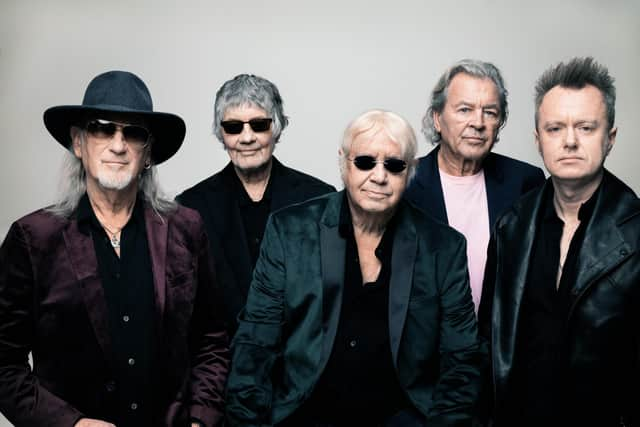
Vocalist Ian Gillan, bassist Roger Glover, drummer Ian Paice and keyboard player Don Airey have been joined by youngblood guitarist Simon McBride and, under the steady direction of veteran producer Bob Ezrin, all take their moment to shine on their latest album =1, with Airey in particular muscling in on the action wherever possible.
A Bit on the Side orders some proggy keyboards and a squealing guitar solo to go with the mean, meaty main course. Sharp Shooter switches lithely from gnarly boogie to streamlined rocker to bluesy swagger and still has room for a wiggy synth solo.
Like The Rolling Stones, Deep Purple are sounding good for their age, even if Gillan cannot muster the athletic screams of old. Instead, he injects some yarn-spinning humour. “The public house beckons,” he salivates as Portable Door rides into town on a retro hard rock riff. There are further drinking adventures on the peppily paced Old-Fangled Thing. I’m Sayin’ Nothin’ is an ode to self-interested propriety, and Gillan is unrepentant on Lazy Sod which delivers on the Deep Purple groove with bonus audacity and arpeggios.
Little is laboured; this has been a well-oiled machine for decades. I’ll Catch You begins with melodious guitar and conversational chanson-like phrasing from Gillan before opening out into one of the album’s most demonstrative tracks and the quintet sustain the flow through closing track Bleeding Obvious.
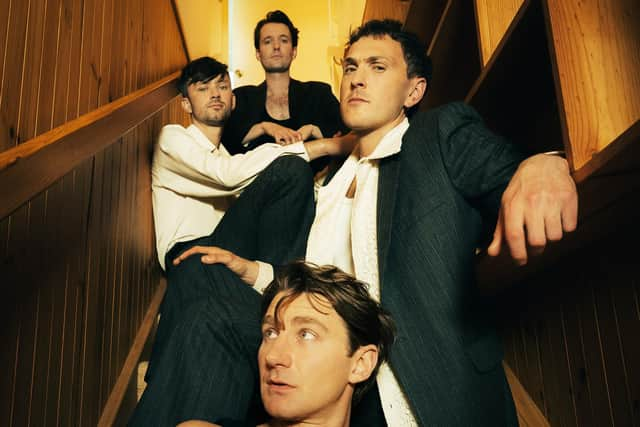
Deep Purple may have ruled the roost fifty years ago; now it’s Glass Animals’ world whether they (Glass Animals, that is) like it or not. The anonymously huge Oxford quartet were blindsided by the success of their global mega hit Heat Waves in 2020 and have stuck to safe shallow waters on their fourth album. Contrary to its intense title, I Love You So F***ing Much presents ten love vignettes which never quite capture the passion they aspire to. A Tear In Space (Airlock) explores the mindbending properties of all-consuming love through the medium of manicured dance pop. The Muse-lite Wonderful Nothing pulls its punches on the fuzz arpeggios and Creatures In Heaven is blandly familiar stadium synth pop in the style of Coldplay/Bastille/take your pick.
Country trailblazer Sturgill Simpson won’t be tied down to one genre or, as it transpires, one name. He returns with a new pseudonym, Johnny Blue Skies, and a quiet album which nevertheless demonstrates the ease with which he traverses rootsy styles, infusing country croon Swamp of Sadness with some Tex Mex accordion, the sultry soul of The Sun Never Rises Again with epic rock guitar and lonesome lament Who I Am with mandolin and pedal steel trills and frills.

Scooter Blues is retro country rock in the spirit of Glen Campbell and Waylon Jennings, the gentle indie canter Right Kind of Dream is fitted with wilting strings, while Jupiter’s Faerie goes full symphonic Nashville sound. But Passage Du Desir is about far more than the pretty window dressing – Mint Tea and the nine-minute One for the Road resonate with sheer country soul.
Californian singer/songwriter Remi Wolf is a bright spark. Her second album Big Ideas is inspired by her coming-of-age exploits, which might explain why she is having such fun styling it out through the sunshine soul of Cinderella, summer bubblegum of Toro, expansive psychedelia of Cherries & Cream and alt.pop hip-hop of Frog Rock among other delicious sonic treats.
CLASSICAL
Jane Stanley: Cerulean Orbits (Delphian) ****
Delphian have a fine record of championing intriguingly unfamiliar names within their especially ambitious catalogue. Here the focus is on Australian-born, Glasgow-based composer Jane Stanley, whose first ever portrait CD showcases five significant pieces written over the past decade. It opens with The Indifferent, a song cycle written for and performed by Héloise Werner and The Hermes Experiment to words by Australian poet Judith Bishop. There’s unceasing enchantment in the colours Stanley evokes, beautifully articulated by the predominant harp, yet the sheer transparency of the score and its crisp energy are equally compelling features. The remaining tracks feature the Red Note Ensemble, from the dream-like flirtatiousness of Cerulean Orbits for violin and piano, to the more extensive mixed sextet of Oneiro, where Stanley’s imaginative texturing – intricate patterns woven together to glistening effect – conjure up utterly mesmerising images. The earlier Suite (2014) offers a robust contrast, every bit as fascinating. Ken Walton
FOLK
Mojna: Väntenätter (Heilo Records) ****
This absorbing contemporary Nordic folk album, exploring elements of counterpoint and spontaneity, comes from the highly regarded Swedish/Norwegian trio Mojna, comprising guitarist and composer Thomas Eriksson, Hardanger fiddle-player Helga Myhr and Anna Malmström on clarinet and bass clarinet. These contrasting yet wonderfully complementary timbres are introduced in the opening Ljusnar, with its gently ringing guitar prelude over wheedling fiddle harmonics and clarinet hoots before the three instruments mesh into the melody. There’s a stately clarinet line to Väv, and busy, traditional sounding Hardanger shrilling in Blixtlynt. The album title track (väntenätter means “nights of waiting”), sees the trio joined by producer Erlend Apneseth also on Hardanger, bass clarinet calling richly over pizzicato fiddle and joined by soft, wordless vocals before the second Hardanger comes in, all four intertwining beguilingly. The closing Skimring is followed by bird calls, giving a sense of thoughtful, atmospheric music emerging out of solitude. Jim Gilchrist