
Scottish Opera’s warning over future output amid funding plea
Scottish Opera is the latest National Performing Company to warn over funding


Scottish Opera has warned it "will be harder" to sustain its output without an increase in funding from the Scottish Government, saying "good management is not a substitute for sustainable investment".
Writing in the organisation's annual report, outgoing chair Peter Lawson called for multi year government funding for the five national performing companies (NPCs), which also includes Scottish Ballet and the RSNO, as well as the Scottish Chamber Orchestra and the National Theatre of Scotland.
Scottish Opera ended the 2025-2026 financial year with a small surplus and reported audience numbers had risen by almost a fifth, but said spiralling costs were continually tightening margins.
Funding for the NPCs has broadly remained flat since 2009, despite soaring inflation over the period.
Mr Lawson said Scotland’s five National Performing Companies collectively generated £60.6 million of Gross Value Added for Scotland’s economy in 2024/25, supporting 1,280 jobs and a wellbeing contribution worth £40.5 million, adding the figure was “a return that should give any funder confidence”.
Scottish Opera’s dependence on the Scottish Government grant dropped from 60 per cent in 2022/23 to 51 per cent in this financial year.
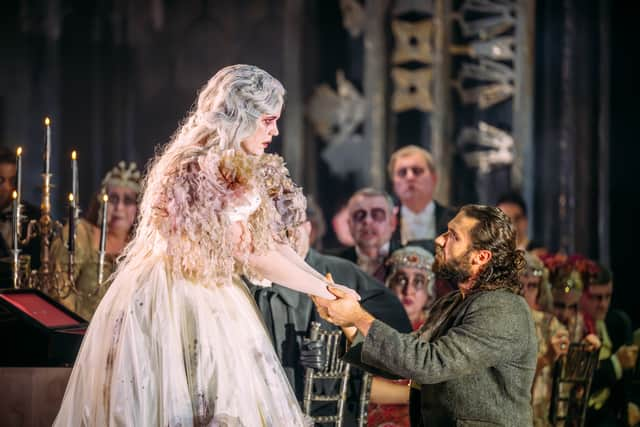
He said: “This has been an ambitious, international year, with Scottish Opera’s work on stages from New York to Sydney, carrying Scotland’s name around the world. Our current year is progressing well, with five-star productions of The Galloping Cure and Turandot.
“Careful management has got us here, but it cannot be a substitute for sustainable investment. Our last 4.1 per cent uplift was consumed almost entirely by rising costs, and we continue to call for multi-year funding settlements for Scotland’s National Performing Companies, so that we can plan with confidence.”
Scottish Opera ended the year with a small unrestricted surplus of £239k on income of £16.7 million. Co-production contributions of £1.42 million, fundraising of £1.40 million and box office of £1.33m all boosted finances, while innovative solutions to stagings, such as sharing sets across productions produced efficiencies. UK Theatre Tax Relief contributed £3.15 million.
Scottish Government core funding of £8.59 million made up 51 per cent of income, proportionately less than 60 per cent in 2022/23. Scottish Opera employs 150 people and around 450 freelancers each year
The world premiere of The Great Wave - inspired by the painting of the same name by Japanese artist Katsushika Hokusai - sold out in March, with 47 per cent of its audience new to Scottish Opera. Overall, audience numbers rose by 18 per cent.
Alex Reedijk, general director of Scottish Opera, said: “Everything we do is for our audiences, the people of Scotland and also benefits Scotland’s economy. This year total audiences grew by almost a fifth, and nearly half the audience for The Great Wave were new to us. We have done this in really challenging times by cutting our cloth and living within our means. We are stable, financially solvent, and have kept our people in work. We are quietly in a good place, but the funding for 2026/27 is a real terms cut, and with continuing spiralling costs, it will be harder to keep doing this much, this affordably.”
The Scottish Government was contacted for comment.
Comments
Want to join the conversation? Please or to comment on this article.