
Cost-of-living squeeze: Two-thirds of Scots using savings to meet daily needs - Scottish Building Society
“Scotland doesn’t have a savings problem - it has a resilience problem” – Paul Denton, Scottish Building Society CEO
Nearly three in four Scots have seen their finances negatively affected by the current economic climate, with two-thirds of people having to dip into savings to make ends meet, new research suggests.
The data from the Scottish Building Society shows that ongoing cost-of-living pressures are also changing people’s expectations and delaying major life decisions.
The impact was found to be “remarkably broad”, affecting every generation, including 72 per cent of those classed as Gen Z and 69 per cent of baby boomers.


At a headline level, 73 per cent of those quizzed - nearly three in four - say the economic climate has negatively impacted their finances. Some 65 per cent of those that save money have used savings to pay for day-to-day outgoings.
The findings come against a backdrop of sticky inflation, with recent official figures revealing a further rise in the headline annual rate to 3.1 per cent. Many economists now expect that figure to push above 4 per cent, which is likely to trigger further interest rate hikes and higher lending and mortgage costs for millions of borrowers.
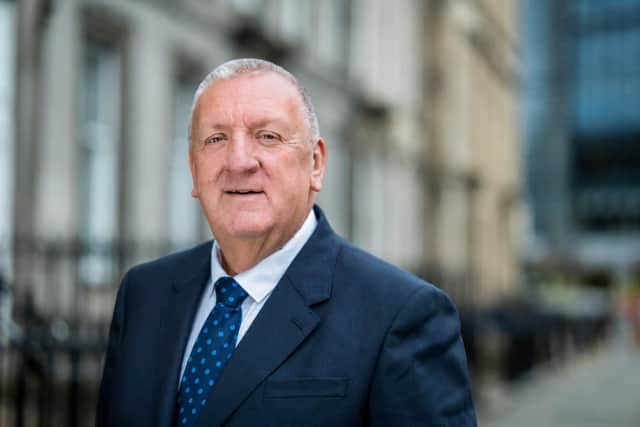
Scottish Building Society chief executive Paul Denton said: “Almost two-thirds of Scots dipped into their savings last year just to cover rising costs. That’s the clearest sign yet that savers have stopped building for the future and started propping up the present.
“The gap is now the real measure of financial resilience. Households with savings absorbed higher energy bills, rising mortgage costs and wider inflation without much damage. Those without a buffer have less disposable income to begin with, which makes saving harder still.”
The research is the first major examination of personal savings in Scotland since Prime Minister Andy Burnham took office in July.
It shows that 65 per cent of Scots savers have either extended the timeframe for their key financial goals, reduced it, or put it on hold altogether. Among Gen Z, that percentage rises to 79 per cent.
The consequences are particularly visible around major purchases. Just 13.7 per cent say they are likely to move home in the next 12 months, while 20.1 per cent are planning to buy a new car. By comparison, 53 per cent still expect to be able to afford an annual holiday.
For younger generations in particular, the research points towards a growing divide between wanting to build wealth and having the financial capacity to do so. Around 30 per cent of savers under 30 are saving towards a new home, compared with just 5 per cent of those over 55.
The society said the old model of reviewing income levels and savings pots as a way to judge borrowing capabilities was no longer reflective of the current personal finance situation.
Financial providers have shifted their lending model from how much a person or household earns to a more holistic approach to wealth. This has impacted the type of products on the market and how people manage their personal finances, the research notes.
The society said there was no longer a “once size fits all” approach to mortgage lending which has made it even more important that savers are using the right product for their needs.
Denton said: “Saving itself now feels like a moving target. Almost seven in ten Scots say they’re worried about their ability to save at all through 2026, and 66 per cent have already extended, scaled back or shelved their main financial goal. Those aren’t separate trends.
“People are worried because the goal keeps slipping, and the goal keeps slipping because the ability to save keeps shrinking.
“That’s stalling wealth-building at the point it matters most. First-time buyers are waiting longer to reach a deposit, and as that goal stretches further away, shorter-term spending is taking its place.
“Spending set aside for an annual holiday actually rose from last year- with 53 per cent saying they will use their savings for an annual holiday next year. As savings goals are stretched, short-term spending has risen up the priority for many people.”
He added: “Scotland doesn’t have a savings problem - it has a resilience problem. People still want to save and still have goals, but the pressures of recent years mean money is increasingly used to cover today’s costs rather than build tomorrow’s security. The task now is to rebuild that resilience: ease the pressure on household finances and make sure whatever people can put aside works as hard as possible for them.”
Last week saw the Bank of England hold the bank base rate at its current level of 3.75 per cent for the sixth time in a row but policymakers said it was likely to rise if high energy prices persist. The conflict in the Middle East has disrupted global energy supplies leading to a sharp increase in petrol and diesel prices and an uptick in inflation.
Bank of England governor Andrew Bailey said energy price volatility made it more likely that interest rates would rise. Many economists are forecasting a quarter-point hike at the start of November.
Alice Haine, head of personal finance at investment platform Hargreaves Lansdown, said: “Rates on pause for the sixth consecutive time offer little comfort to households already grappling with higher living costs. With inflation back on the ascent and frozen income tax thresholds continuing to dilute the benefit of pay rises, budgets remain under pressure.”
Comments
Want to join the conversation? Please or to comment on this article.