
New academy looks to help fill Scotland’s critical industrial skills gap
“Our ambition is simple - to equip people with the skills employers need today and in the future” – Peter Waggott
An innovative skills academy is set to open in Dundee next month to support the country’s industrial growth ambitions in key areas such as renewable energy.
Training and consultancy firm Vertical Motives Consultancy will open the VMCL Skills Academy at MSIP Dundee to teach a combination of school-leavers, unemployed adults, career-changers, upskilling employees and international learners critically-needed skills.
The aim is to meet current and future real-world skills demands by offering the most effective accredited training in a single integrated model. The plan is to train a minimum of 100 people a year and grow the cumulative number trained from 150 next year to 450 in 2030.
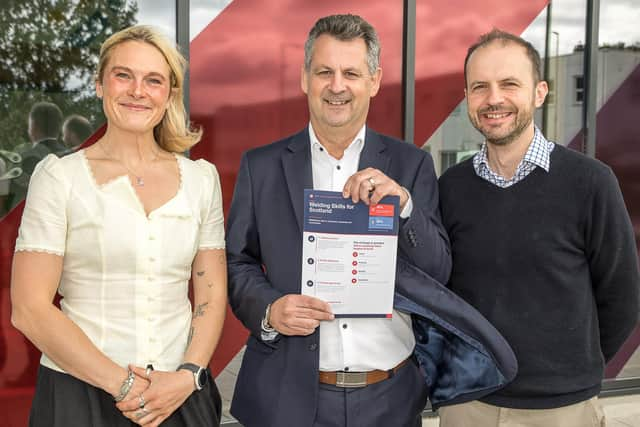

The academy has been more than four years in the planning for Vertical Motives managing director Peter Waggott and a team of specialists, working with the Scottish and UK governments and other officials.
Waggott’s vision is to create Scotland’s leading skills academy for advanced manufacturing and workforce development, providing employers with direct access to skilled talent, industry-aligned training, innovation capability and future-focused technologies.
It is estimated that Scotland needs more than 11,000 additional engineers by next year across 31 core roles, as well as more electricians. The UK as a whole needs 35,000 more welders by 2027.
Key areas being targeted by the new academy include renewables, advanced manufacturing, construction and infrastructure.
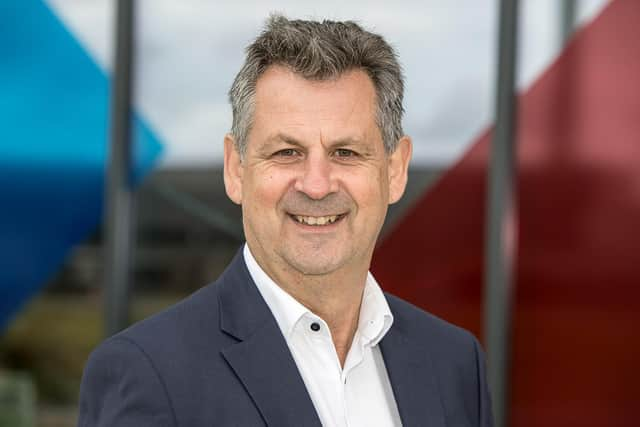
Waggott, who will act as project lead, said: “The VMCL Skills Academy is a transformational, industry-led initiative that will help develop the skilled workforce needed to support Scotland’s energy transition, advanced manufacturing ambitions and future digital economy.
“The academy is designed to create accessible, high-quality pathways into employment and career progression for people from all backgrounds, including school-leavers, unemployed people, veterans, career-changers, neurodivergent learners and those from under-represented groups.”
He added: “By working closely with employers and education partners, we are creating a sustainable pipeline of talent that addresses critical skills shortages while opening up new opportunities for individuals and communities across Scotland.
“Our ambition is simple - to equip people with the skills employers need today and in the future, helping drive economic growth, social inclusion and long-term prosperity.”
Phase one of the academy will teach welding, fabrication techniques and manufacturing quality assurance, procurement and supply chain management, plus leadership, communication and employability skills. The academy is planning to use “cutting-edge innovative equipment and techniques to match its future-focused vision”.
The facility will also include traditional learning and exam environments designed to meet the standards of accreditation bodies. An “immersive projection room” will help learners rapidly build site awareness, safety behaviours and cross-disciplinary understanding for new renewable roles.
For example, it will enable learners to virtually experience being on top of a wind turbine or inside its nacelle or at an offshore solar farm without travel or risk, enabling realistic practice of working at heights, inside confined spaces or offshore safety routines.
Phase two of the academy is planned to incorporate a green data centre, transforming the facility into a fully-integrated advanced manufacturing and digital engineering campus.
For now, the facility plans to start fit-out and open for applications this month and begin training in late September.
As part of the plan, staff will do outreach to all schools in Dundee and Angus in the fourth quarter of this year to highlight career pathways and show what jobs are available.
Meanwhile, hundreds of Scottish start-ups are to benefit from legal support that promises to “remove barriers to growth” following a new partnership deal.
Delivered through the Royal Bank of Scotland’s Accelerator programme, the agreement between the banking giant and law firm Harper Macleod will see a dedicated solicitor assigned to the Glasgow and Edinburgh Accelerator hubs, where some 1,400 businesses operate out of. They will offer one-to-one surgery sessions, giving community members access to in-person legal advice at both locations, RBS noted.
Legal advice will also be delivered remotely through the Accelerator app to some 2,300 community members across Scotland.
The new partnership will also see Harper Macleod supporting key events at the Accelerator hubs, such as for Glasgow Tech Week.
Royal Bank of Scotland said it was committed to creating the “connections and conditions that innovators need to successfully scale”, from early-stage ideas to venture backed growth and eventually exit. The bank’s Accelerator programme is said to be seeing significant growth, having announced partnerships with the University of Edinburgh and Scotland’s Smart Things Accelerator Centre (Stac) in recent months. It is aiming to support 5,000 Scottish start-ups in 2026 - more than in the last ten years combined.
Darren Pirie, head of accelerator and partnerships at Royal Bank of Scotland, said: “For many new entrepreneurs commercial agreements and legal blockers can be difficult, complex and costly to navigate. The core aim of our Accelerator programme has always been to remove the barriers to growth, through tailored support to start-ups and growing businesses.
“That is why our new partnership with Harper Macleod is so exciting. It brings dedicated in-person and virtual legal advice for the very first time to our community members, to unravel these challenges.
“This agreement broadens the Royal Bank of Scotland’s support for our innovation economy as we continue to work towards backing 5,000 Scottish entrepreneurs this year.”
Jo Nisbet, a partner specialising in supporting entrepreneurs at Harper Macleod, said: “Harper Macleod has a long and proud history of working alongside Scotland’s entrepreneurs from the earliest stages of their journey through to scale and beyond. We know that the decisions taken at the outset of a business can have a lasting impact, which is why access to clear, practical legal advice at the right time is so important.”
Comments
Want to join the conversation? Please or to comment on this article.