
Scottish hotels end summer on high but fears grow over tourist tax impact
“There’s only so much visitors will be willing to pay for a room before escalating costs begin stifling demand” – Katie Morrison, RSM
Scotland’s hotel sector ended the summer on a high, a new survey has revealed, but fears are growing that new tourist taxes could stifle demand.
The latest hotels tracker from audit, tax and consulting firm RSM UK shows that average daily room rates (ADR) of occupied rooms in Scotland rose to £212.58 in August, up from £203.35 in August 2025. Revenue per available room (RevPAR) - a key industry measure - was also strong north of the Border, at £186.34, up from £178.69 a year earlier.
The figures compare well to UK-wide data, which show the ADR of occupied rooms rose from £152.80 in August 2025 to £156.38 this August. Meanwhile, RevPAR in the UK also increased, rising from £125.79 to £129.48, year on year.

Gross operating profits in Scotland were also strong, rising from 50.5 per cent to 51.5 per cent. In the UK as a whole, gross operating profits eased, falling from an average of 37.2 per cent in August 2025 to 36.3 per cent this August.
Occupancy of Scottish hotels dropped marginally to an average level of 87.7 per cent compared to 87.9 per cent a year earlier. This contrasted with UK-wide occupancy, which nudged up to 82.8 per cent, from 82.3 per cent in August of last year.
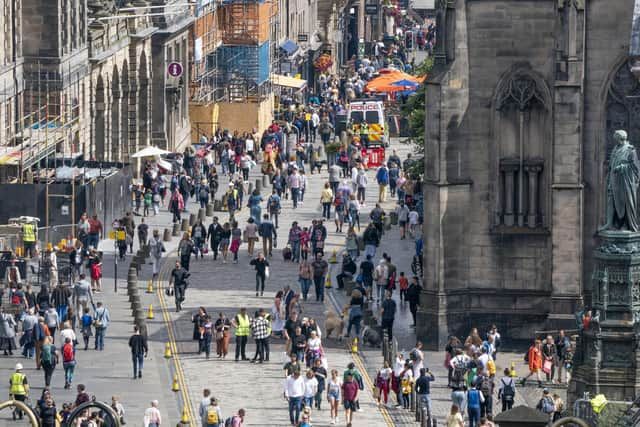
Katie Morrison, partner and head of consumer markets at RSM UK in Scotland, said: “Scotland’s hotel industry ended the summer on a high, as visitors made the most of big tourist events such as the Edinburgh Festival Fringe and enjoyed staycations as the heatwave continued.
“Despite recent economic challenges including high energy bills, hotelier’s profits, room rates, and revenues have all remained strong in Scotland. Further headwinds could lie ahead though, as increasing energy prices and the government’s tourist tax put a further squeeze on margins,” she warned.
“As consumers are also going to feel the pinch from rising inflation and higher energy costs, there’s only so much visitors will be willing to pay for a room before escalating costs begin stifling demand. Operating profits could also take a hit, due to the increasing administrative costs of implementing the new tourist tax.”
The data is compiled and produced by Hotstats and analysed by RSM UK on a monthly basis.
Thomas Pugh, chief economist at RSM UK, said: “Households have proved surprisingly resilient through this year and strong spending on hotels is another factor suggesting that consumer spending remained robust throughout the summer.
“Overall, households seem to be smoothing through the hit to their incomes from higher energy and financing costs by saving a bit less and borrowing more. However, the outlook for the second half of the year has worsened with the recent resurgence in energy prices.
“Inflation is set to jump to around 4.5 per cent early next year and real household income growth will stagnate or even turn negative,” he added. “That will inevitably weigh on discretionary spending, including hotel stays.”
Comments
Want to join the conversation? Please or to comment on this article.