
UK inflation falls to 3%: What this means for interest rates, borrowers and savers
“It seems now the journey back towards the Bank of England’s 2 per cent target has regained momentum” – Kevin Brown, Scottish Friendly
Mortgage payers and borrowers could be just weeks away from a further cut in interest rates after UK inflation eased to its lowest since March last year.
Economists said the likelihood of a rate reduction at the Bank of England’s next meeting, on March 19, had increased following the good news on the inflation front. The central bank is also under pressure to inject some life into an economy that is showing little to no growth and rising rates of unemployment.
The latest official figures show that the annual measure of consumer prices index (CPI) inflation eased to 3 per cent in January from 3.4 per cent in December - though that new rate remains a full percentage point above the Bank of England’s 2 per cent target.
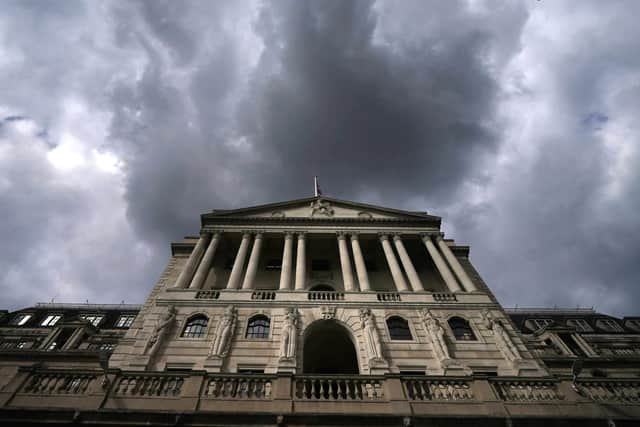

The reading was in line with the predictions of most economists and puts inflation back on a downward trajectory after an increase in the previous month. The annual rate of CPI peaked at 11.1 per cent in late 2022.
Emeritus professor Joe Nellis, economic adviser at MHA, the accountancy and advisory firm, said an interest rate cut was now “a near certainty” in March as inflation cools while unemployment rises. The Bank of England’s rate-setting monetary policy committee (MPC) will announce its latest move on March 19.
“UK inflation eased to 3 per cent in January, suggesting that the era of runaway price growth is behind us,” noted Nellis. “For households and businesses alike, this represents real progress.
“While much of the recent improvement reflects fading energy effects, subdued goods prices, and normalised supply chains, this is also the result of cautious consumer demand. This adds even greater weight to arguments for an interest rate cut when the MPC next meets.”

A quarter-point cut would take the UK’s benchmark interest rate down to 3.5 per cent after it was trimmed to 3.75 per cent shortly before Christmas. February’s MPC meeting resulted in a tight 5-4 vote in favour of holding interest rates.
The inflation data from the Office for National Statistics (ONS) showed that motor fuels particularly contributed to the fall last month, with the average price of petrol falling by 3.1p per litre between December 2025 and January 2026.
ONS chief economist Grant Fitzner said: “Airfares were another downward driver this month with prices dropping back following the increase in December. Lower food prices also helped push the rate down, particularly for bread and cereals, and meat. These were partially offset by the cost of hotel stays and takeaways.”
The ONS reported that food and non-alcoholic drink price inflation slowed markedly from 4.5 per cent in December to 3.6 per cent last month. It also meant that prices were 0.1 per cent cheaper in January than in December, after a drop in the cost of bread and cereals.
Recent price increases in alcohol and tobacco also slowed from 5.2 per cent in December to 4.6 per cent in January. However, this was partly offset by a rise in hotel prices, with accommodation inflation rising to 1.1 per cent for the month after a 0.1 per cent dip in December.
The easing in the headline rate of inflation will provide some relief for Chancellor Rachel Reeves, amid efforts by the Bank of England to bring inflation back to the target level of 2 per cent.
Make sure you keep up to date with breaking news from across Scotland by signing up to our free newsletter here.
Luke Bartholomew, deputy chief economist at Scottish investment group Aberdeen, said: “The drop in inflation back to 3 per cent should clear the way for the Bank of England to cut interest rates in March. Granted services inflation was a tad stronger than expected, and this does play an important role in the Bank’s thinking.
“But with the labour market data [this week] pointing to ongoing weakness in employment and a further softening in pay growth, most policymakers are likely to look through any short run stickiness in the services data.
“Indeed, inflation is set to fall further in coming months, falling back to 2 per cent in the near future, which should open up further rate cuts later this year.”
Kevin Brown, savings expert at Glasgow-based financial mutual Scottish Friendly, said many households would welcome the news of cooling inflation, as it suggests December’s uptick was not the start of a renewed trend upwards.
“It seems now the journey back towards the Bank of England’s 2 per cent target has regained momentum,” he said. “That matters not only for policymakers considering rate cuts, but for households whose financial planning depends on the direction of prices.
“The key point, however, is that inflation easing is not the same as inflation disappearing. Even at 3 per cent, prices are still rising meaningfully year on year. Compounded over time, that continues to shape the real value of savings.
“For borrowers, this strengthens the case for the MPC to trim rates in March. For savers, the picture becomes more nuanced. As inflation falls, interest rates are also likely to continue to ease, which could narrow the window for locking in attractive cash returns.”
Emma Wall, chief investment strategist at Hargreaves Lansdown, the investment platform, added: “Savers who can should lock in higher rates of interest now, as fixed term products are likely to quickly reflect the market trajectory. Using a savings platform will help consumers ensure they are getting the best rates on the market from a range of providers.”
Comments
Want to join the conversation? Please or to comment on this article.