
UK inflation unexpectedly flatlines: What this means for interest rates and mortgages
“For households, this is encouraging, but inflation doesn’t need to be rising for the cost-of-living squeeze to remain painful” – Kevin Brown, Scottish Friendly
News that the annual rate of inflation held steady last month at 2.8 per cent will bring relief to thousands of hard-pressed businesses and households, as well as an under-pressure Labour government.
The unexpected flatlining came as a slowdown in food price inflation helped offset pressure from airfares and the unchanged reading for May will ease pressure on the Bank of England - which meets on Thursday - to consider raising interest rates, at least at this stage.
According to the Office for National Statistics (ONS), the consumer prices index (CPI) measure of inflation was recorded at 2.8 per cent in May, the same rate as in April. That was lower than expected by most economists, who had been eyeing an uptick in inflation to about 3 per cent. It means the price of goods and services is still increasing, but at the same pace as in April.


The steady rate of inflation for May means that it remained at the lowest level since March 2025, despite pressure from the Middle East conflict on prices.
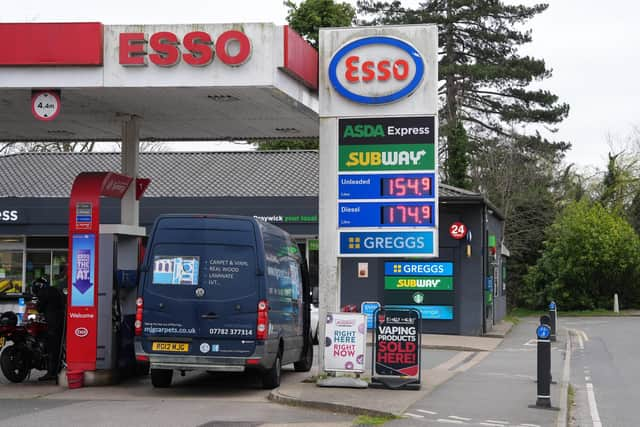
Household energy prices have remained depressed after a lower Ofgem energy price cap came into force in April. However, the fresh ONS data also showed further upward pressure on fuel costs, with the average price of petrol rising by 0.6 pence per litre between April and May, to 157.4p per litre for the month.
There are concerns that the rate of inflation will gather pace in the coming months though the risk of CPI breaching 4 per cent this year has declined substantially. It peaked at a heady 11.1 per cent in October 2022 in the wake of Russia’s invasion of Ukraine.
Thomas Pugh, chief economist at audit, tax and consulting firm RSM UK, said: “Unexpectedly steady inflation in May eliminates any lingering chance of a rate hike [this Thursday] and will go a long way to taking a hike in July off the table as well.
“Looking ahead, inflation will stay around current levels before jumping higher in July when the utility price cap resets. We think it will then rise a little further over the rest of the year as the supply chain impacts of previously higher oil prices, higher agricultural prices and second-round effects start to be reflected in consumer prices.
“However, the sharp drop back in oil prices combined with a weak labour market, slowing pay growth and tight financial conditions means the risks of second-round effects are much lower than in the previous energy crisis.”
Rob Morgan, chief investment analyst at Charles Stanley, part of Raymond James Wealth Management, added: “The door to interest rate cuts is closed for now, but the one to rises remains ajar.
“The disruption from the Iran war has dashed hopes of falling rates as a fresh inflationary wave hits our shores. After the shocks of Covid and the Ukraine war, central bankers remain hypersensitive to anything that risks embedding another round of inflation and any thoughts of interest rate cuts are firmly on the backburner.”
Bank of England forecasts have predicted that inflation could rise to 3.6 per cent later this year in even its most benign scenario regarding the Middle East conflict.
The latest ONS figures showed that more expensive motor fuel contributed to elevated transport inflation, which lifted to 6.8 per cent for May - the highest level since November 2022. However, the largest catalyst for sharper transport inflation was higher airfares, which increased by an average of 10.3 per cent month-on-month, largely linked to the early timing of Easter and the school holidays.
Those higher transport costs were partly offset by a slowdown in price rises for food and non-alcoholic drinks. Food and drink inflation eased to 2.2 per cent from 3 per cent in April, falling to its lowest level since December 2024.
The ONS highlighted that it was linked to downward pressure from meat, particularly beef and ham, and dairy products including cheese.
Get our new weekly Business newsletter - click here
Kevin Brown, savings expert at Glasgow-based financial mutual Scottish Friendly, said the data suggested that the recent energy shock hadn’t fed through “as forcefully as feared”, giving the Bank of England more room to look through the immediate inflationary pressures resulting from the Iran conflict.
“Hopefully easing pressures in the Middle East should dampen inflation concerns and give policymakers more time to assess whether this is a short-term shock,” he added. “That points to a hold, while an unchanged reading makes it harder to argue for an immediate rate rise.
“For households, this is encouraging, but inflation doesn’t need to be rising for the cost-of-living squeeze to remain painful. The practical response for many will be to review savings rates, energy tariffs, mortgage costs and everyday spending, while considering whether longer-term money could work harder through investing.”
Meanwhile, the inflation surprise could spell good news for the 1.8 million or so homeowners who are due to remortgage over the next year, according to Samuel Fuller, director of Financial Markets Online.
“The UK’s rapidly changing interest rate outlook could trigger a price war between mortgage lenders, many of whom will want to cut rates to make themselves more competitive,” he noted.
Craig Rickman, personal finance expert at Interactive Investor, part of Aberdeen Group, added: “Mortgage rates are toppy relative to the deals available a few months’ ago, and the higher energy price cap landing in July will only intensify price pressures. In the months ahead, inflation could edge up again as the effects of the Iran war feed further into the UK economy, though previous forecasts might be tempered with Donald Trump declaring a peace deal has been signed.”
Comments
Want to join the conversation? Please or to comment on this article.