
FTSE 100 rebounds on resolution hopes after early plunge amid prospect of four interest rate hikes
“UK rate expectations have been on a remarkable journey in barely a month” – Chris Beauchamp, IG
Shares rebounded from an early plunge on Monday morning amid hopes of a negotiated resolution to the conflict in the Middle East.
President Donald Trump announced that he had extended his deadline for Iran to reopen the Strait of Hormuz, saying the US would hold off on power plant strikes for five days.
He said the US and Iran have had “very good and productive conversations” that could yield “a complete and total resolution” in the war.
The UK’s benchmark FTSE 100 Index pushed higher shortly before lunch on Trump’s social media update after an earlier plunge had seen it fall further from the 10,000 level, dropping more than 200 points, or over 2 per cent, in morning trade. The blue chip share index dropped below 10,000 on Friday for the first time since reaching the milestone level in early January.
Brent crude had lifted to about $114 dollars a barrel after Iran warned it would strike electrical plants across the Middle East if Trump had followed through on his threat to bomb power stations in the Islamic Republic after his 48-hour deadline.

There had been heavy falls overnight in Asia as the rhetoric from the US and Iran suggested little sign of a resolution to the conflict, with the Nikkei in Japan ending down more than 3 per cent.
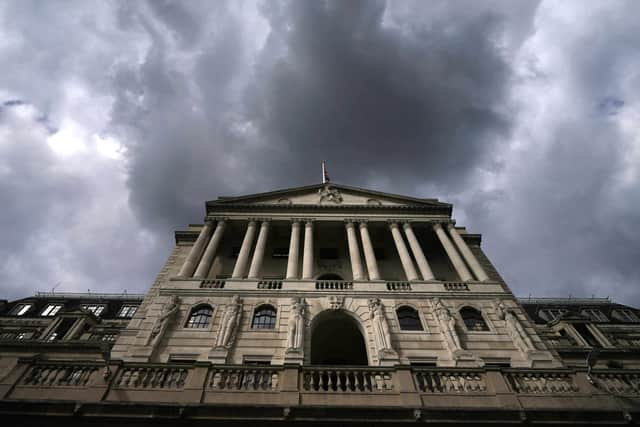
Last week saw the Bank of England holding the UK bank base rate at 3.75 per cent, confirming that the war in the Middle East had put paid to a previously expected cut. The central bank said a “shock to the economy” sparked by the US-Israeli action in the region could push inflation back up to 3.5 per cent this summer, with rate-setters deciding a pause would give them time to consider the scale of the fallout.
Prior to the conflict many economists had been expecting at least a couple of quarter-point interest rate cuts this year as inflation looked to be cooling. Those forecasts have now been flipped on their head.
Chris Beauchamp, chief UK market analyst at investing and trading platform IG, said: “UK rate expectations have been on a remarkable journey in barely a month, but a full 100 basis points [one percentage point] rise in rates is now expected for this year.
“The bad news for consumers is compounded by dire news for the government, as the ten-year yield tops 5 per cent. A fiscal squeeze of dire proportions has exploded in a matter of weeks, but with more escalation expected in the Middle East, this may be just the beginning of the crisis.”
Russ Mould, investment director at AJ Bell, said the “risk dial has been turned up again” on the Middle East conflict, causing widespread turbulence within financial markets.
“So far during the current crisis investors have focused on the potential for a short, sharp inflationary shock,” he noted. “That’s an uncomfortable situation, but nothing out of the ordinary.
“Now the focus shifts to a more serious scenario where any destruction of vital infrastructure in the Middle East could cause major disruption to energy and food supplies on a wider scale, and a notable hit to economic growth with longer-lasting consequences.
“The ten-year gilt yield went back above 5 per cent, having last week touched this level for the first time since the global financial crisis. This is the market’s way of saying the outlook for UK interest rates has radically changed.
“Three weeks ago, the market expected two rate cuts in the UK this year. We’re now looking at a situation where rates could be hiked four times by the end of 2026, according to market probability data. That has significant consequences for consumer and business spending, for the UK economy, and for public finances as the government’s cost of servicing debt would go up and tighten fiscal headroom.”
The soaring oil price remains one of the biggest concerns, with the Strait of Hormuz being one of the world’s most critical energy chokepoints. About a fifth of the world’s oil supply is usually shipped through the Strait. However, traffic through the relatively narrow passage has all but halted since the conflict began more than three weeks ago.
Any prolonged disruption would have significant consequences for supply chains in the UK and feed through to general inflation.
Kathleen Brooks, research director at XTB, said: “This could be a pivotal week for the conflict, and we could see who blinks first. All eyes are on the Strait of Hormuz, which is the epicentre for financial markets.
“If the Strait is reopened then the oil price could sink. However, if Iran does not adhere to Trump’s ultimatum, then it could seriously weaken the president’s hand, with untold consequences for global markets.”
Fresh inflation figures are due to be released on Wednesday. The headline rate is expected to have been broadly steady last month but experts warn of a shock to the system in the months ahead as energy bills soar.
The rate of consumer prices index (CPI) inflation has been gradually easing back towards the Bank of England’s 2 per cent target level since last summer.
Thomas Pugh, chief economist at audit, tax and consulting firm RSM UK said: “Wednesday’s inflation data will likely show it has held steady at 3 per cent in February. Services inflation should drop back to 4.1 per cent from 4.4 per cent off the back of lower hospitality inflation.
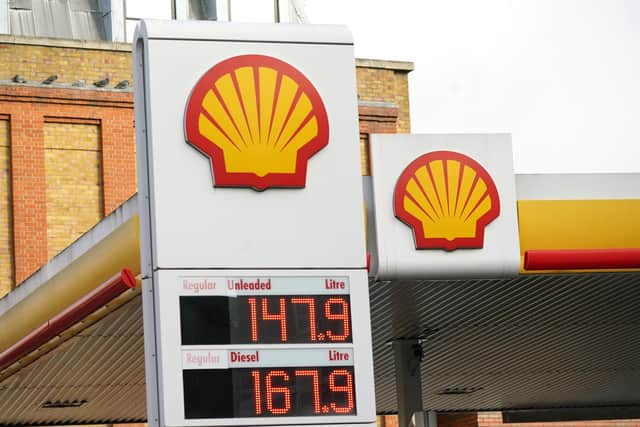
“Inflation is expected to rise in March as the initial impact of higher fuel prices begins to show up in the official data. As pump prices rise to around £1.60 per litre by April, we expect inflation to fall only a little, compared to slowing to 2 per cent as previously forecast.
“Further ahead, the rise in natural gas prices will see Ofgem increase the energy price cap in July, exerting further upwards pressure on inflation and taking it back over 3 per cent.”
Comments
Want to join the conversation? Please or to comment on this article.