
Why Scotland’s national drink may need its ‘Aperol Spritz moment’
“The whisky industry is critically important to Scottish jobs, but it is facing difficult times”
Scotch whisky is, of course, a cornerstone of the country's economy, supporting approximately 41,000 jobs across some 154 operating distilleries. The industry generates some £5.3 billion of economic value in Scotland, making it the most productive sector after energy.
Full-year exports to the United States, the industry's largest market by value, fell by 4 per cent in 2025, to circa £933 million, while global exports also declined, albeit more modestly. Trade barriers – particularly US tariffs – were a major contributor to that decline.
This picture has shifted, however. From July 24, US tariffs on Scotch whisky were removed entirely. The Scotch Whisky Association has called it “welcome news”, with Scotch's most valuable global market now open tariff-free again. It follows a similar reduction in India, where tariffs have fallen from 150 per cent to 75 per cent immediately under the new UK-India trade deal. Whether this translates into a genuine export recovery, though, is a separate question from the structural, generational shift in how whisky is consumed.

The financial impacts are real. Diageo has closed the visitor centre at its Clynelish distillery in Brora, and earlier this month the drinks giant placed 172 distillery roles at risk, with 38 potential redundancies.
Over and above, there is little doubt that consumer drinking habits are changing – and, in the process, compounding the issue. The associated trends may not simply be around a decline in drinking. People are drinking in smaller measures, and buying cheaper bottles, with premiumisation losing ground to flavoured drinks, experiential occasion drinks and ready-to-drink formats favoured especially by millennials and Gen Z drinkers. Given Gen Z and millennials now represent circa 50 per cent of the world's population, this is not something to be ignored.
The industry is lobbying for greater tax fairness and can take some comfort from an anticipated rise in domestic demand. But is there another route to long-term growth?
Two trends may point to the answers the industry may be seeking: the boom in ready-to-drink (RTD) products, and the runaway success of Aperol Spritz.

The global alcoholic RTD sector is valued at somewhere between $18 billion (£13.3bn) and $44bn. Ready-to-drink and easy-to-use formats align well with the way Gen Z and millennials drink – largely occasion-focused, casual and with low effort.
Interestingly, the RTD sector is one where premiumisation is less affected: most new launches are positioned as premium rather than cheap, which makes RTD a genuine premium format as well as an accessible entry point.
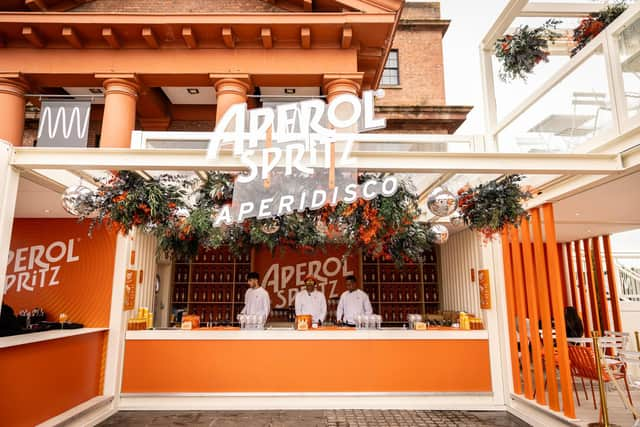
While none of the above necessarily indicates people are drinking more, it does highlight a shrinking, more selective audience whose loyalty relies less on single-brand allegiance, and more on convenience, moderation and format flexibility. Canned versions of popular cocktails embody the shareability and low-commitment appeal that has driven the success of drinks such as Aperol Spritz – a wine-based cocktail of Prosecco, Aperol and soda water – which has gained social media viral popularity. For an industry built on craft, heritage and patience this is a very different value proposition, and one the Scotch whisky sector needs to tackle.
Gen Z and millennial demand for whisky is not linear and sectors that misread structural habit changes as trends are likely to lose more than sales, especially in the case of Scotland where jobs and communities are at real risk. Gen Z is drinking less than any previous generation, and prioritising experience, authenticity and personal values over heritage. This is a generation that wants to know what a brand stands for as much as how it tastes. Producers that continue to market to this audience in traditional ways are likely to end up following a shrinking and increasingly indifferent audience.

However, opportunity exists. RTD growth and the Aperol Spritz phenomenon are proof of that, and indicators that this opportunity splits into two segments.
The first segment is premium, experiential drinkers. Millennials are estimated to be responsible for a significant share of the ultra-premium whisky market despite drinking less overall. When they choose to drink, they will typically trade up, seeing the choice as an experience rather than a routine purchase. Scotch whisky brands must communicate genuine value rather than leaning heavily on heritage alone. This plays directly to Scotland's strengths in provenance, craft, and location, but the story must be told in a way that resonates rather than simply invoking tradition.
The second segment is casual, convenience drinkers. Bacardi Breezer and Smirnoff Ice have both been relaunched to attract Gen Z, while cask ale has seen a circa 50 per cent rise in popularity amongst 18-24-year-old pub-goers. It could be argued that whisky's traditional rituals and symbolism, once its greatest assets, may have held it back from gaining the same audience.
Against this backdrop, the scale and nature of the challenge the industry faces become evident. Winning both premium and casual drinkers is hard: the message for a casual drinker may look nothing like that for a brand justifying its premium price. Any brand that tries to be all things to all drinkers – heritage-driven yet a session drink, exclusive and accessible – risks becoming confusing for everyone and relevant for no one.
If attraction isn't difficult enough with Gen Z and millennials, retention is possibly even harder: these generations are often willing to leave any brand that ceases to feel relevant and authentic. Whisky producers must become attention-seekers – constantly earning the right to be consumed by these groups.
The whisky industry is critically important to Scottish jobs, but it is facing difficult times. If we accept that the consumption habits of millennials and Gen Z are structural rather than fleeting trends then, given the consumer scale they represent, the industry cannot afford to treat this as merely a marketing challenge. These groups may determine how much of the industry, and the communities dependent on it, will survive and thrive in the longer term.
Identifying and pursuing a clearly defined audience, with values that support the lives they lead, may be the most sensible place to start.
It will not solve tax policy or geopolitical uncertainty on its own, but it could give a new generation a genuine reason to engage with Scotch and give the industry that means so much to Scotland the shot it needs.
Edinburgh-based Ben Sutherland, a partner at MHA, specialises in key sectors such as food & drink and agriculture.
Comments
Want to join the conversation? Please or to comment on this article.