
Here's what 90 per cent cut in UK overseas aid means for one of world's poorest countries – Susan Dalgety
The Labour government’s decision to slash the aid budget means thousands of women in Malawi may well die
British aid money saves lives. Whether you agree with the principle of government spending on overseas development assistance (ODA), there is no argument that it works. Ignore the isolationists that insist it is a waste of money and that it should not be a priority during a time of global economic uncertainty: they are wrong. The data proves it.
I am sitting in the one of the countries – Malawi – where hard cash from the United Kingdom has averted thousands of deaths in recent years. Over the next two weeks, I may even meet some of them.
Young women who did not die in childbirth because of British intervention. Middle-aged women whose health has not been destroyed by multiple pregnancies thanks to better reproductive health funded by the UK.
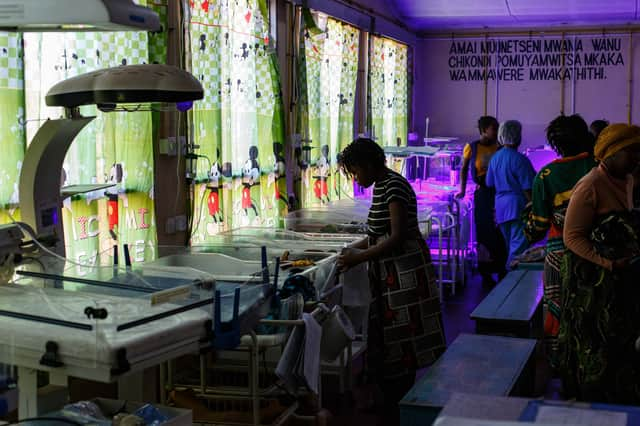

Hard evidence of life-saving aid
I will meet young women whose lives have been transformed by access to decent education. Families who have survived the worst impact of the climate emergency because UK money – a minuscule portion of tax revenue – has provided early warning systems, more robust housing, and small cash transfers so that people can still eat when storms destroy their maize crops.
This is not empty rhetoric, designed to tug at your heart strings. I am not an innocent abroad who wants to adopt every Malawian orphan she meets. It is evidence from a recent report by the highly respected think tank, the Centre for Global Development, which examined the efficacy of UK aid to Malawi over the last two decades, around £1.6 billion in today’s money.
The research was clear: “UK tax-payers money [still] made an enormous difference to people’s lives. Many of those results will continue to be felt – thousands of Malawians are still living the lives saved, feeling relief from the justice they received and using the reading and writing skills UK aid paid for…”

The ‘merits’ of austerity and aid cuts?
A success story in anyone’s terms. Yet, earlier this year, the UK government effectively ended aid to Malawi, one of the world’s poorest countries, slashing its annual investment by 90 per cent, from £50 million in 2025-26 to £5m in 2028-29.
Speaking when the new UK aid budget was revealed in July, the then Foreign Secretary Yvette Cooper tried to justify the cuts. “With less investment, we need to refocus to ensure it has the most impact,” she said, in tones reminiscent of former Tory Chancellor George Osborne on the ‘merits’ of austerity. This is not really a cut, it is a “refocus”.
A “refocus” that may well kill thousands of women over the next decade, but avowed feminist Cooper went ahead anyway.
As I was packing for this trip, which will see me visit eight schools across the country where former First Minister Jack McConnell’s foundation supports 200 girls each year to complete their secondary education, I found myself in unknown territory – agreeing with the Scottish government.
Malawi a ‘fantastic example’
Scotland’s international development minister, Simita Kumar, has just called on Prime Minister Andy Burnham to “urgently” reverse the cuts in aid for Malawi, and those planned for Rwanda and Zambia. "At a time when these countries face significant economic, social and climate-related challenges, cuts of this scale risk undermining hard-won progress and will be felt most acutely by vulnerable communities,” she said.
On Tuesday, there was cross-party support at Holyrood debating the special relationship between Scotland and Malawi that was sparked off by David Livingstone’s exploration of the region in the 19th century, particularly his campaign to end the East Africa slave trade.
Even Reform joined in the celebrations to mark the 150th anniversary of Blantyre, Malawi’s second city, which was named after Livingstone’s birthplace, and interestingly retained its ‘colonial’ name after independence.
In a member’s debate brought by the SNP’s Claire Haughey, MSPs from all the parties represented at Holyrood spoke warmly of the relationship between our two countries. Some bemoaned our colonial past. Others celebrated our shared history.
Reform MSP Jamie Langan, while supporting the motion, unsurprisingly had a sideswipe at the principle of international aid, but ended on a positive note: “We should never be apologetic for our role in the world. Malawi is a fantastic example of the role we can play,” he said.
Hear, hear, Jamie Langan. Britain should never say sorry for supporting the development of those countries left behind by the global economy and suffering the worst effects of a climate crisis they did not create.
Effects of Trump’s Iran war
The Centre for Global Development’s report acknowledged that while UK aid had, over the last two decades, saved lives, it had had little material impact on Malawi’s economy. It remains an extremely poor country, a situation made far worse by the actions of others.
Donald Trump's war on Iran has had a devastating impact on Malawi. Rising fuel and fertiliser prices have led to a shortage in foreign exchange and put these essential commodities out of reach of all but a tiny elite.
As I write, there is scarcely any petrol or diesel to be had in Malawi, except in the informal market, where a litre of fuel is sold for around £8.50. The country has effectively ground to a halt, and it is those at the bottom – which in Malawi is the majority – who suffer the most. No fuel means no mini-buses for village women to carry their vegetables to market.
The International Food Policy Research Institute predicts that the impact of the Iran war, combined with weather phenomenon El Nino, will see 4.5 million more Malawians go hungry in the coming months.
Later this month, Chancellor John Healey faces an almost impossible task balancing the UK’s budget, which has been a hot mess since the 2008 crash, but if Burnham’s government abandons the principles of mutual solidarity that have underpinned Labour’s international policy for generations, what hope is there for countries like Malawi? None.
Comments
Want to join the conversation? Please or to comment on this article.