
State of UK's Armed Forces is bordering on a national emergency. This is no time for party politics
The unseemly bickering between Labour and the Conservatives over which party is to blame for the weakness of the UK military needs to stop
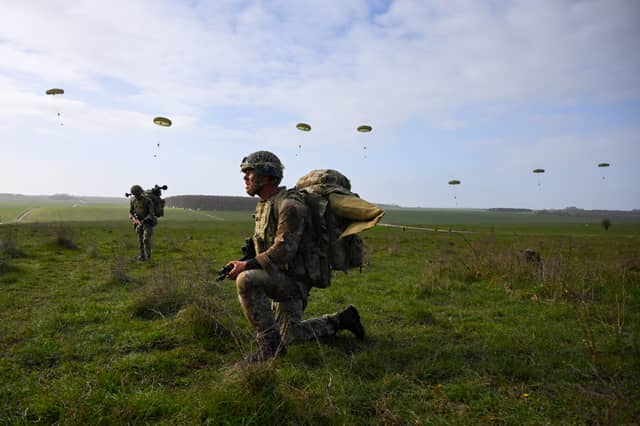


The drumbeat of warnings about the parlous state of the UK’s Armed Forces is getting louder.
Speaking at the Policy Exchange think tank, former Conservative security minister Tom Tugendhat, who served with the Royal Marines in Iraq and Afghanistan, said Britain had become far too reliant on other countries. “France defends Britain's sovereign territory. The United States takes decisions that determine our future without consulting us,” he said. “... we have too few ships, too few soldiers and too few planes.”
Tugendhat added that spending on the pensions triple lock and “the health demands of a generation that should be at work, not off work, have left us living on a prayer”.
A ‘rallying call’
Meanwhile, First Sea Lord Gwyn Jenkins, appointed last year, told an event at the Royal United Services Institute that he was determined to make the Royal Navy “much stronger” as maintaining the status quo was “simply not good enough”.
“This need has come into focus as threats have developed and evolved over the last decade but it became irrefutable in 2022 with Russia's egregious, full-blown invasion of Ukraine. That rallying call has only grown louder with the geopolitical developments of the last four years, including in the Middle East,” he said.
The unseemly bickering between Keir Starmer and Conservative leader Kemi Badenoch over which party is to blame for our current situation needs to stop. Defence spending was allowed to slide in a very different era, when the collective strength of Nato was enough to deter any threat. The ‘hybrid war’ tactics used by Vladimir Putin and Donald Trump’s hostile attitude towards America’s Nato allies mean this is no longer the case.
With the situation bordering on a national emergency – recall ex-Nato chief George Robertson’s warning earlier this month that “we are under attack, we are not safe” – all parties must put aside their differences and work together on boosting the Armed Forces’ capabilities, while accepting the need to co-operate closely with our European allies to build a credible, collective deterrent to Putin, whatever Trump chooses to do.
The defence of the realm is the primary responsibility of government. It is not a subject for party political point-scoring.
Comments
Want to join the conversation? Please or to comment on this article.