
Exclusive:Fears SNP's ScotWind at risk of collapse without Chinese firm MingYang's Highlands factory approval
SNP ministers have been accused of having “left Scotland dangerously dependent on foreign powers like China”.

North Sea developers have warned the SNP’s flagship ScotWind risks falling flat unless a controversial Chinese manufacturer is allowed to open a factory in the Highlands.
The warning linked to Chinese firm MingYang comes amid fears it is “highly unlikely” projects can be built in time “by existing Western” companies.
The plea comes as new analysis by The Scotsman reveals £9 billion of ScotWind investment and thousands of green jobs could be lost overseas if Scotland fails to ramp up its own manufacturing base for turbines in the coming years.
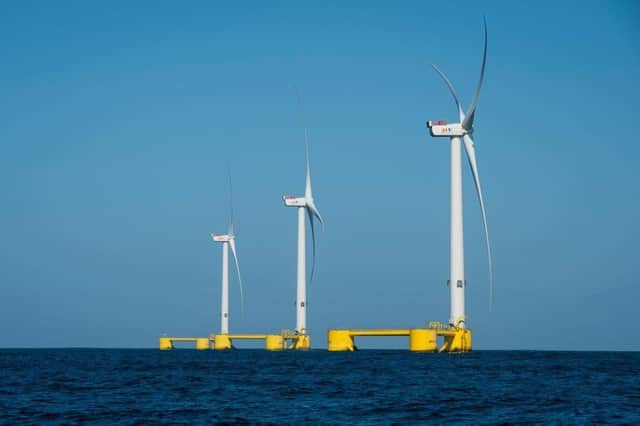

Key North Sea ScotWind players have told The Scotsman that security concerns “can be managed by developers” and, if MingYang is given the green light by the UK Labour government, it would “allow developers to roll-out offshore wind faster and cheaper”.
The call comes just days after Shell confirmed it was relinquishing the CampionWind lease - one of the biggest ScotWind contracts.
ScotWind is the Scottish Government’s flagship offshore wind leasing rounds, issued by Crown Estate Scotland, which tallied up £756 million in auctioning off parts of the seabed.
Billions of pounds of investment is poised to be poured into the projects. But fears have emerged that a lack of manufacturers with a Scottish base, such as MingYang, risks investment going overseas and the ScotWind ambitions potentially being diminished.
Meanwhile, political messaging from Westminster has spun a narrative pushing back against investment in renewables, with both Nigel Farage’s Reform UK and the Conservatives pledging to row back support and policies for clean energy and net zero. ScotWind being a success is key to the UK and Scottish governments’ energy and climate blueprints, as well as the obvious economic benefits if domestic investment is secured.
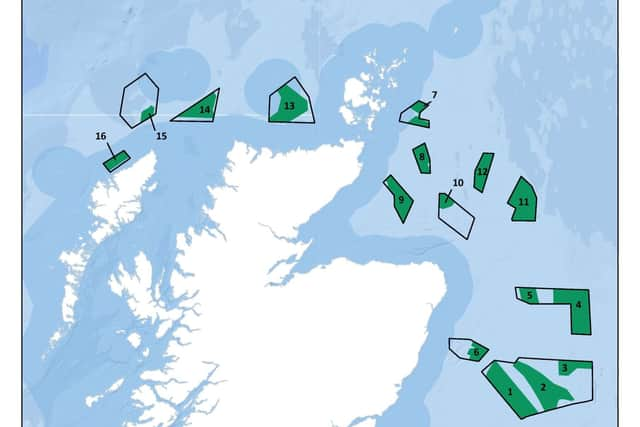
Amid investment jitters in the global energy sector, several developers who have secured ScotWind contracts to build offshore projects have told The Scotsman that MingYang should be given permission to proceed by the UK government with its £1.5bn turbine factory earmarked for the Highlands, assuming national security concerns can be mitigated.
MingYang has claimed the £1.5bn project would create up to 1,500 jobs. The first turbine production would take place by late 2028.
One firm, which wished to remain anonymous, warned “it’s highly unlikely that the current pipeline of projects in Scotland can be fulfilled within the allotted timeframes by existing western OEMs [original equipment manufacturers]”.
Asked specifically about MingYang being given the green light, the firm said “greater competition in the marketplace is essential to deliver the best-value proposition for consumers”.
READ MORE: Will Chinese turbine national security concerns derail Scotland's floating wind ambitions?
“Scotland needs its own manufacturing base for floating offshore wind,” the firm said.
“With the largest leased area for floating offshore wind, Scotland should welcome opportunities for inward investment to ensure it can deliver its planned pipeline and secure wider economic benefits and unlock export potential in new skills and technology.”
Another ScotWind developer also backed Chinese firms being able to enter the Scottish and UK supply chain, stressing national security concerns “can be managed by developers”. The developer said allowing Chinese firms like MingYang to operate “will allow developers to roll out offshore wind faster and cheaper”.
Another key North Sea player added that without Scotland ramping up a domestic supply chain, “developers become more dependent on overseas suppliers, which adds cost and programme risk, especially under global supply chain pressures”.
They added: “In a market limited to two or three incumbent OEMs, supply capacity is very constrained and the element of competition lacking.

“Chinese OEMs investing in new facilities in Scotland would create jobs for local people and establish a local supply chain - as would an OEM investment from another country.
“Subject to adequately addressing any security/cyber security concerns, Chinese firms should be allowed to enter the supply chain.”
The company warned “the lack of domestic supply chains creates a bottleneck where developers are forced to rely on international suppliers, increasing costs and lead times, and reducing the economic benefits for local communities”.
“The UK continually faces significant challenges in developing robust and localised supply chains for offshore wind,” the company said.
The firm pointed to “limited manufacturing capacity for essential components like blades, nacelles, and foundations, which are still predominantly imported” as well as “port infrastructure constraints” and “skilled labour shortages, particularly in fabrication, logistics, and commissioning roles”.
To develop 50GW of offshore wind capacity by 2030, the UK will need to install more than 2,700 new turbines by the end of the decade - roughly one new turbine every day.
Industry insiders insist the key to Scotland reaping the economic benefits of the offshore wind boom will be manufacturing. One figure stressed “we need to make things again”.
But analysis by The Scotsman has found that of a total of £46bn of supply chain manufacturing commitments by ScotWind developers, only £13bn is pledged to happen in Scotland - just 28 per cent of the investment and associated jobs.
Developers have claimed that up to £22.3bn, roughly half of the manufacturing investment, could take place in Scotland, if fabrication supply chains are ramped up. This suggests around £9bn of investment could be lost overseas if manufacturing supply chains are not ramped up in Scotland.
Research from the energy transition institute at Robert Gordon University has found “over 80 per cent of the UK offshore wind and cluster projects in construction/installation (by GW) between 2025 and 2030 forecast to be outside Scotland”. The university research warns that “sustaining other energy related activities will be critical to ensure Scotland can retain its supply chain capacity and jobs before ScotWind, INTOG and other activities come online in the early 2030s”.

Last year, The Scotsman revealed MingYang was among eight renewable energy projects promoted to “priority” status by a flagship investment strategy. The status was granted by the Scottish Offshore Wind Energy Council (SOWEC), of which the Scottish Government is a member and which runs a scheme designed to kick-start an offshore wind supply chain for Scotland.
The scheme, known as the Strategic Investment Model (SIM), is seen as vital to creating the supply chain needed to ensure that multinational developers can build a series of massive wind farms in the North Sea, known collectively as ScotWind.
But included on the SIM update last year was the MingYang project, including a potential £30m of public funding to be handed over by the Scottish Government’s investment body, Scottish Enterprise.
Scottish Enterprise declined to tell The Scotsman whether MingYang has received any public funding or would do in the future. But the body confirmed no money had been handed over to the firm this financial year.
Last month, Scotland on Sunday revealed John Swinney, Kate Forbes and SNP business minister Richard Lochhead had held talks with MingYang over the company’s potential Scottish investment.
Briefing documents revealed the Scottish Government’s foreign investment arm, Scottish Development International ( SDI) had “been working with MingYang for several years, have hosted various inward visits and support Team Scotland co-ordination with the UK Department for Business and Trade to streamline engagement with the company”.
In June, in a meeting between Ms Forbes, the Scottish Government’s economy secretary, and UK investment minister Poppy Gustafsson, “the investment opportunity to bring Mingyang to Scotland was discussed” in talks, five days after the Deputy First Minister met with the company.
Alongside the ScotWind supply chain concerns, there are also fears over the Scottish Government’s Innovation and Targeted Oil and Gas (INTOG) leasing round’s potential reliance on firms like MingYang to bridge the gap in manufacturing.
Speculation has emerged the Green Volt development, which is set to be the world’s first commercial-scale floating offshore windfarm, would like to use the MingYang Scottish facility for manufacturing. However, no supplier has been confirmed.
Only £350m of manufacturing for Green Volt has been committed to Scotland, despite £1.3bn of total manufacturing being required for the project. The developers have issued a warning that “significant parts of the supply chain are not yet established”.
The developers of the Salamander INTOG proposed development have warned “there are currently no Scottish Wind Turbine Generator (WTG) suppliers”, leaving the firm little choice, but to look elsewhere.
They added: “Some WTG suppliers have plans to locate facilities in Scotland to manufacture some components. Our ambition is to utilise an OEM who will commit to this.”
Blade manufacturer Vestas has earmarked a factory in Leith, thought to be dependent on the Berwick Bank windfarm that has now been granted Scottish Government approval. But no final investment decision has yet been taken.
One of the biggest unions in manufacturing and engineering branded the failure to create promised renewables jobs in Scotland while huge contracts streamed abroad “a national disgrace” and has called for new urgency.
Louise Gilmour, GMB Scotland secretary, said any investigation into security concerns around Chinese investment in Britain and Scotland, including MingYang’s plans, must be thorough, but swift.

She said: “We need not welcome every multinational promising to invest and create jobs in Scotland without question, but have already wasted too many years. Concerns, particularly around national security, must be properly assessed, but not used as another excuse for more indecision and further delay.
“If ministers are confident promised investment will create good, unionised jobs without risk, then it is beyond time for them to act with an urgency that has so far been completely lacking.”
Scottish Labour net zero spokesperson Sarah Boyack said: “For years the SNP has let green jobs go overseas and it looks like this record of failure is set to continue with ScotWind.

“Not only did the SNP sell our sea beds off on the cheap, but it failed to build the supply chain needed to keep ScotWind jobs in Scotland. Scotland is set to lose out on billions of pounds of investment as a result of the SNP’s failure to plan ahead and support Scottish manufacturing.
“While the SNP has broken promise after promise on green jobs, Scottish Labour will back Scottish industry, back Scottish workers and make Scotland a true clean energy superpower.”
Scottish Conservative shadow net zero and energy secretary Douglas Lumsden said: “The SNP’s failure to build a proper domestic renewables supply chain has left Scotland dangerously dependent on foreign powers like China.

“Their obsession with chasing headlines on wind energy, without any long-term plan for jobs or skills, is putting our energy security, or potentially national security, at risk.
“Instead of outsourcing our renewables sector abroad, ministers should be backing Scottish firms and workers to deliver the green jobs we were promised. Central to that is dropping their reckless opposition to oil and gas, because firms in this sector – who are being frightened off – are among the biggest investors in renewables.
“Once again, the SNP’s incompetence and short-termism are jeopardising both our economy and our national security”.
A Scottish Government spokesperson said: “We fully support the view that Scotland needs its own manufacturing base for floating offshore wind and are working with a wide range of both international and domestic supply chain companies to grow the supply chain and realise the economic opportunity for Scotland of offshore wind.
“We welcome investment from a range of companies, including MingYang Smart Energy's proposed £1.5 billion investment in a new turbine manufacturing facility at Ardersier.”
Mingyang was contacted for comment.
A UK government spokesman said: “This is one of a number of companies that wants to invest in the UK. Any decisions made will be consistent with our national security.”
Comments
Want to join the conversation? Please or to comment on this article.