
Scotland 'going backwards' on private land ownership as latest statistics revealed
Concern over accumulation of new sites by major landowners amid reform push

Land ownership in Scotland has become even more concentrated despite decades of high-profile reforms, with a little over 400 landowners owning half of the privately-owned rural land across the country, according to a new report.
The latest Who Owns Scotland report by the veteran land reform campaigner, Andy Wightman, calculates that nearly 3.2 million hectares of land is held by just 408 individuals or companies, with just 2.7 per cent of rural Scotland - some 216,485 hectares - under the ownership of community groups.
The former Scottish Green MSP’s analysis pointed to a surge in existing owners acquiring more land, with the overall holdings of the top 25 private landowners increasing by 24,980 hectares between 2024 and 2025.
Mr Wightman said such trends underlined the failure of land reform initiatives and argued that far from making progress, Scotland was “going backwards” in tackling the “uniquely contracted pattern of privately-owned rural land.”

The findings have also drawn criticism from the national representative body for community landowners across Scotland, which warned the nation was facing economic, social and environmental crises “firmly rooted in our archaic landownership pattern.”
However, the head of rural landowner body, Scottish Land & Estates, said consolidated land ownership has provided “transformational” forestry and peatland restoration initiatives, and claimed that 94 per cent of land scales were under 500 hectares.
The report, published on Monday, shows that 83 per cent of rural Scotland is owned by private entities, including individuals, companies, and trusts. Some 2,413 landowners own 70 per cent of the privately-owned rural land compared to 2,588 in 2024, and 3,161 in 2012.
The findings, derived from Mr Wightman’s project and empirical Registers of Scotland research, indicate that the amount of publicly owned rural land has decreased by 6.3 per cent since 2012, down from 925,767 to 867,117 hectares. However, the amount of community owned land is up more than 25 per cent over the same period, from 172,294 to 216,485 hectares.
Wildland Ltd, the firm owned by Danish billionaire, Anders Holch Povlsen, has expanded its landholdings by over 38 per cent since 2012, up from 64,457 to 89,061 hectares. Similarly, Strathconon Estates Ltd, owned by billionaire Lego heiress, Sofie Kirk Kristiansen, has seen its footprint soar by 54 per cent over the same period, up from 28,266 to 43,511 hectares.

Other major new landowners have also contributed to the more concentrated ownership picture, with Gresham House Ltd, which owned no land in Scotland in 2022, now holding more than 73,000 hectares via a number of Scottish limited partnerships and other vehicles.
Last November, Holyrood passed the Land Reform (Scotland) Act, which could force the break up of some large estates. The legislation is designed to help reduce the concentration of rural land ownership among a small number of people and ensure communities have a greater say.
While land reform campaigners welcomed some aspects of the bill, critics warned that it showed a lack of ambition and was not sufficiently radical to address an issue that has grown in political prominence in recent years.
Mr Wightman said his latest research - which spans 4,927 landholdings covering 5.9m hectares, or approximately 77 per cent of the total amount of rural land in Scotland - showed that more needed to be done to prevent a smaller number of landowners owning such significant parcels.
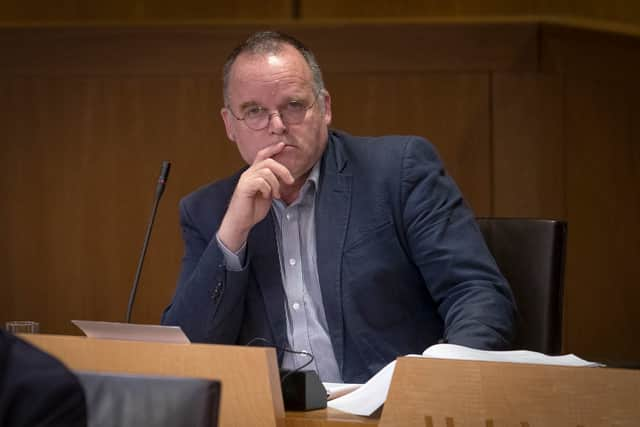
He pointed out that in 2024, half of Scotland’s privately-owned rural land was in the hands of 421 entities, with the figure standing at 440 in 2012.
He said: “Scotland is going backwards when it comes to tackling the uniquely contracted pattern of privately-owned rural land. When I first published statistics in 1996, I fully expected that over time this concentration would slowly be diluted. Instead, it has increased with fewer and fewer owners owning more and more land since around 2010.
“It is further evidence of the failure of land reform to tackle this core issue at the heart of the centuries old land problem.”
Dr Josh Doble, director of policy at Community Land Scotland said, “With so little public and communal land, and with one of the greatest inequalities in landownership anywhere in the world, Scotland is an international anomaly. This has real impacts for all of us. We are facing economic, social and environmental crises firmly rooted in our archaic landownership pattern.
“Private landowners owning so much of our country stifles local economic development, blunts our response to the depopulation crisis and means we can't stop ecologically disastrous land management. Without robust regulation of landownership and land sales we will not be able to prevent the amassing of vast estates by billionaires, asset managers and aristocrats.”
Dr Doble said the Scottish Government was allowing public money to “flow to wealthy private landowners” and encouraging further land concentration via subsidies and tax breaks, rather than taking what he described as “bold and necessary land reform measures.”
Sarah-Jane Laing, chief executive of Scottish Land & Estates, said rural estates generate an estimated £2.4 billion in GBA each year and supported more than 50,000 jobs.
She said: “The publication of data around land sales is welcome and informative, but it does not provide detail on how land is used - and the assertion that large-scale private landownership produces negative outcomes is simply not borne out by the facts.
“Large-scale ownership has long been part of Scotland’s landscape – including by the Scottish government itself, which is the country’s single largest landowner, managing more than 11 per cent of Scotland, around 857,000 hectares.
“Where ownership has consolidated, it has often enabled transformational forestry and peatland restoration at scale, directly advancing Scotland’s net zero ambitions. When ministers purchased 3,500 hectares at Glenprosen in 2022, scale was explicitly cited as the primary reason.
She added: “The reality is that Scotland is home to thousands of private landowners – from family farms and small estates to community bodies and charities. Scottish Land Commission data shows that in 2024, 94% of land sales were under 500 hectares, with most relating to farmland. Public opinion does not reflect the rhetoric that some keep trotting out.”
Land reform secretary, Mairi Gougeon, described the Land Reform (Scotland) bill as a “watershed moment” in Scotland’s land reform journey.
She said: “The concentration of landownership in Scotland is an issue hundreds of years in the making. Addressing this inequality won’t be quick or easy.
“The act is a huge step forward. It will, for the first time in Scotland’s history, give ministers new powers to consider the impact on the local community of land sales, potentially leading to some large landholdings being lotted into smaller parts when sold.
“The ambitious measures introduced by the Act will empower communities with more opportunities to own land, placing legal responsibilities on the owners of the very largest landholdings to set out how they use their land and how that contributes to key public policy priorities, like availability of land for housing to ensure thriving rural communities and addressing climate change.”
Comments
Want to join the conversation? Please or to comment on this article.