
CalMac ferry Caledonian Isles that returned last year after 20-month repairs costing £11m to be retired

Ageing vessel to be decommissioned instead of another ferry that’s five years older
A CalMac ferry is to be retired less than two years after £11million was spent on keeping the vessel on the water in what has been described as an “utter waste of taxpayers’ money”.
Caledonian Isles, which sails on one of CalMac’s busiest routes, is due to end its 34-year career in April as part of the replacement of three of ageing large ferries with brand new vessels.
It returned to service a year ago after 20 months of repairs.
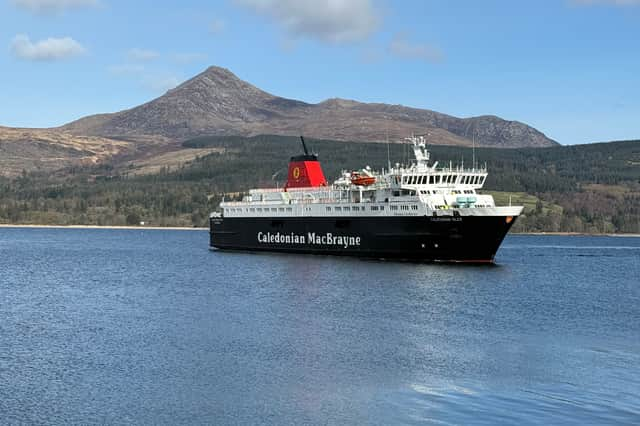

CalMac said the spending was required to get Caledonian Isles back into service to avert “major disruption to Arran and other routes over the past year”.
The cost mounted during the unprecedented length of the repairs, which started with the replacement of thinning steel in its hull, then involved steelwork being bent out of shape, followed by major equipment faults.
The 1,000-passenger ship’s departure from the Ardrossan to Brodick service will come after the retiral of the 31-year-old Isle of Lewis from the Barra route in December, with the last sailing of the 42-year-old spare vessel Isle of Arran - CalMac’s oldest large ferry - to follow next August.
The ships may have new lives as ferries in the Mediterranean, as The Scotsman revealed in July.
READ MORE: The surprising destinations of scrapped CalMac ferry parts as 40-year-old vessel stripped
They will make way for the hugely-delayed Glen Rosa, which is due to be completed more than eight years late in December, and three ferries being finished in Turkey - Loch Indaal this month, and Lochmor and Claymore next year.
Caledonian Isles, CalMac’s third oldest large ferry, had been due to switch to the main Mull route.
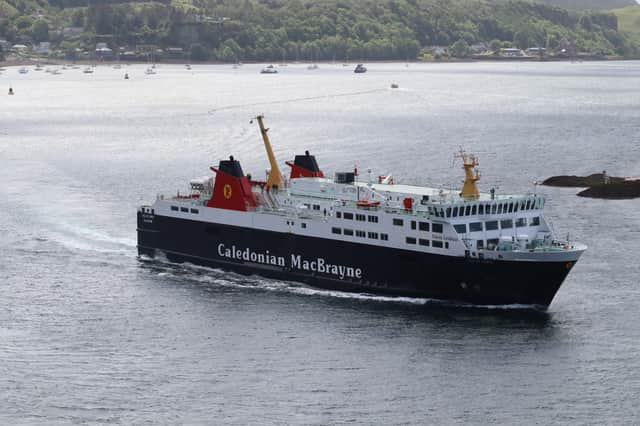
However, it was chosen for decommissioning instead of 38-year-old Isle of Mull - CalMac’s second oldest large ferry - because Mull islanders want to keep that ferry, which is now due to be replaced in around five years.
Mull and Iona Ferry Committee chair Joe Reade said: “We are pleased that a life extension to the Isle of Mull has been agreed.
“Whilst younger, none of the vessels that could have replaced her were suitable for the route. We hope she will continue her relatively good reliability record into old age.”
However, he added: “Caledonian Isles should have been retired years ago, but CalMac's desperation led to millions being spent on her rusting hull to keep her in service for what has turned out to be 18 months at best.
“Now she's off to the scrapyard - I doubt anyone will buy it - and all that taxpayer money is utterly wasted.”

Caledonian Isles is due to be replaced by 26-year-old Hebrides in April for the summer season - transferred from the Little Minch Skye/Harris/North Uist triangle routes - and 15-year-old Finlaggan, switched from Islay, for the winter next year.
Glen Rosa is due to operate between Troon and Brodick from February because it is too large for Ardrossan until the port is upgraded.
Loch Indaal is due to join the main Islay route in December, working with one of the service’s existing ferries Finlaggan.
Loch Indaal’s sister vessel, which entered service in March, will become a spare or “resilience vessel” until returning to the route in March and Finlaggan will become a resilience vessel over the summer.
Lochmor and Claymore are due to start serving the Little Minch triangle from April and July respectively.

Glen Sannox, Glen Rosa’s sister, built for Arran but now designated as a spare vessel, will serve Oban-Barra next summer.
Bill Calderwood, secretary of the Arran Ferry Committee said: “Perhaps folks will be surprised at the timing after the cost involved to bring the vessel [Caledonian Isles] back over recent years.
“Caledonian Isles has not had the best record following annual maintenance and has one mezzanine deck out and has not been as resilient as expected.
“We need to have vessels that can deliver the timetable and consistently operate the route to Ardrossan for as long as possible.
“Hebrides should fill that need. The one big difference will be capacity for passengers which drops from 1,000 to 600 with the Hebrides.”
A spokesperson for the Islay Ferry Committee said: “CalMac has listened to our plea to retain Finlaggan on the Islay service during the entire winter and have agreed that this will happen.”
The committee had argued that Isle of Islay still had teething troubles, such as its mezzanine vehicle decks being out of action, and Loch Indaal was likely to have some snagging issues too.
It also said Finlaggan did not have to go out of service for maintenance, and was not subject to passenger number restrictions when “dangerous goods” such as fuel tankers were carried.
The spokesperson said: “For the community, it was something of a no brainer to want to keep Finlaggan for the winter and we are glad that after strong lobbying, CalMac has been willing to agree.
“For the summer, we are resigned to the almost certain fact that the route will have to operate with two new vessels.
“We expect that Isle of Islay’s mezzanine decks will be sorted by then and that any snagging issues for Loch Indaal will have been dealt with.”
A CalMac spokesperson said: “The investment in Caledonian Isles was necessary given challenges at the time. This was prior to the entry to service of both Glen Sannox and Isle of Islay, and if not made would have caused major disruption to Arran and other routes over the past year.
“Based on the profile of our major vessel fleet and, in balancing community asks regarding vessel deployment, we’ve identified Caledonian Isles as one of the vessels most appropriate for redelivery [disposal]."
Pauline Blackshaw, CalMac’s director of planning and performance, added: “We’ve engaged extensively with several island communities and developed a plan which at minimum maintains, if not enhances, the service they currently receive even if they are not getting one of the six new vessels.
“The plan provides a vessel appropriate for the level of service each community not only needs, but wants, and allows us to provide certainty to communities in terms of what that service looks like in the coming years.”
Retired CalMac ferries still in service elsewhere in the world
Following retirement from Scottish waters, several former CalMac vessels are still in service across the world, including in Cameroon.
Some ferries are still running more than 60 years after they were made, while one has become an unofficial tourist attraction after being wrecked on Cape Verde 12 years ago.
The three vessels poised to retire are most likely to make it to the Mediterranean, where benign weather and summer-only sailings mean the ferries have further service to give.
Former CalMac ferries still sailing include Columba, which was built in Aberdeen in 1964 and sold in 1989.
It was renamed Hebridean Princess and has since operated cruises in the Western and Northern Isles.
Troon-built Iona served various routes from 1970 until being sold to Pentland Ferries in 1997 to operate in Orkney, renamed Pentalina B.
Suilven, which was built in Norway in 1974, ran on the Ullapool-Stornoway route before being sold to New Zealand in 1995 to operate between its North and South islands.
It moved to Fiji in 2012 where it capsized in a harbour three years later.
Comments
Want to join the conversation? Please or to comment on this article.