
Ordering more CalMac ferries from Ferguson Marine shipyard would be ‘problematic at best and folly at worst’

Transport Secretary Secretary Flynn said protecting jobs at yard was “right political decision”
Directly awarding ferry contracts to troubled Scottish Government-owned Ferguson Marine would be “folly at worst”, its vessel-buying firm has warned in a damning assessment of the shipyard’s capabilities.
Caledonian Maritime Assets Limited (Cmal) also said handing it a contract to build electric ferries for CalMac would be “problematic at best” because of “fundamental concerns” over value for money, delays and quality.

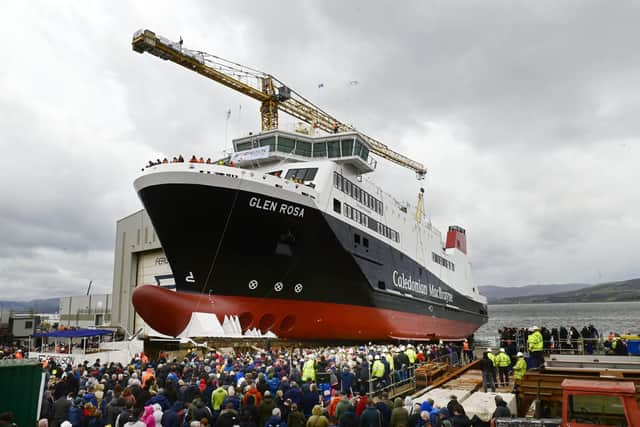
Its advice came as the Port Glasgow yard was still completing the massively-delayed Glen Rosa ferry for CalMac, which will be approaching nine years late if it hits the latest delivery deadline in February after missing a series of previous dates.
Willie Rennie, convener of the Scottish Parliament’s transport committee, where the Cmal guidance was revealed on Wednesday, said he had “never seen such a strong letter”.
However, Transport Secretary Stephen Flynn told the committee it was more important to keep the yard open and protect jobs in Inverclyde.
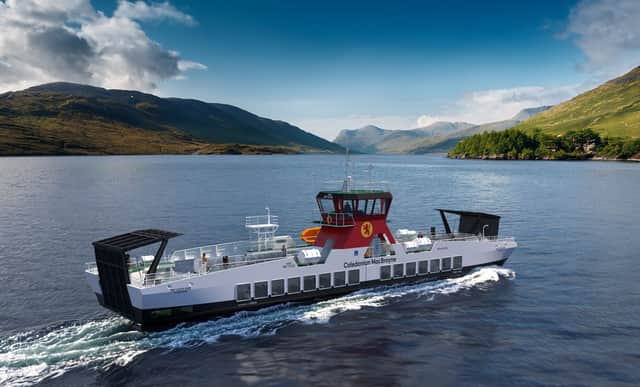
Ministers are seeking advice from competition authorities over whether they can legally hand contracts for electric ferries for Barra and Harris to Ferguson Marine after it lost out last year to a Polish yard for an initial order of seven similar vessels.
The letter, from Cmal chief executive Kevin Hobbs and chair Morag McNeill, marks a significant shift in its attitude to the yard as Mr Hobbs had previously expressed “absolute” confidence in its ability to build small ferries after successfully completing several a decade ago.
Committee member Graham Simpson, reading from the letter, said: “On value for money, ‘the perspective of the Cmal subject matter experts is that the anticipated cost to design, fabricate and deliver the vessels at Fergusons under a directly awarded contract is likely to far outweigh the costs that could be achieved through an open competitive procurement inviting bids from a range of capable and experienced shipbuilders in the market both domestic and international’.”
The letter also stated: “Delay may come in two forms - first, we foresee a comparative delay of the duration of the design and build phases at Fergusons as compared to the duration of that work by a first class shipyard with a recent proven track in production of vessels of this type.
“Second, we cannot escape the risk of additional delays occurring once the project is underway at Fergusons such as we have experienced in the completion of Glen Sannox and the still pending delivery of Glen Rosa.”
On quality, Cmal wrote: “It's ten years since Catriona entered service and the Ferguson yard completed a small hybrid electric vessel.
“It's understandable that given the well-documented struggles of the yard in the intervening period and in particular since nationalisation, there is nervousness as to the capability to produce high-quality vessels at pace.

“The Cmal board feels strongly that the detriment to the island communities of a direct award to [Ferguson Marine] far outweighs the planned benefit to the workforce of Inverclyde.
“We understand the desire to retain jobs in the area but a combination of past performance in terms of time and costs [means] it is difficult to see why a decision to build ferries would be made.
“Our observation would be to build other vessels at that facility but certainly not the ferries that are desperately needed to support the island economies.”
But Mr Flynn said: “It's incredibly important that what I seek to do as a member of the government is ensure that at all times we are able to deliver on our objectives of ensuring that there is vessels provided to meet the needs of the islanders and that we do so in a way which takes into account the requirements of ensuring that we are able to maintain commercial shipbuilding on the Clyde.
“I believe it is the right political decision, not just for the islanders who will be able to be in receipt of new vessels, but also for the workforce in Scotland's last remaining shipyard on the Clyde.”
Mr Flynn said Ferguson Marine “have a very strong record in relation to delivering these sorts of vessels in the past and I look forward to them being able to deliver these types of vessels again in the future by utilising the workforce at Inverclyde who deserve our support.”
Yard chief executive Graeme Thomson said it had “learned hard lessons” from building Glen Sannox and Glen Rosa.
He said: “Ferguson Marine has new leadership, stronger governance, greater programme management control and a skilled workforce ready to deliver.
“Our recent past does not define our future and our focus remains on showing that our yard can and will build Scotland’s ferries well, on time and to budget.”
The GMB Scotland, the main union at the yard, said it was clear that Cmal did not want to place more orders at Ferguson Marine because the previous electric ferries order went abroad and conditions were imposed preventing it from bidding to replace the larger CalMac ferry Lord Of the Isles.
Senior organiser Robert Deavy said: “People have short memories but Fergusons built a third of the current CalMac fleet and was once, not that long ago, Scotland’s ferry factory.
“With the right leadership and proper investment, it can again deliver a steady stream of first-class small ferries for Scotland’s islanders.
“The lack of ambition and support for a publicly-owned shipyard with such strategic industrial potential is beyond grim.”
Comments
Want to join the conversation? Please or to comment on this article.