
Scotland’s problems are fixable but here are changes I'd like to see for Australia game

You have to pick your best players in their strongest positions at Test level
Scotland don't need to reinvent themselves after Saturday's defeat to New Zealand. They need to be more accurate, more ruthless and find a way to maintain their intensity for 80 minutes.
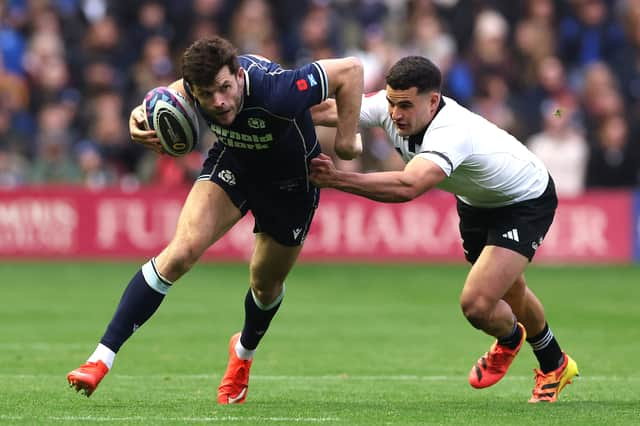

That's the frustrating thing about the defeat. For large periods, Scotland showed they could trouble one of the best teams in the world, but individual errors, missed opportunities and a significant drop-off in the second half ultimately cost them.
Australia arrive at Murrayfield with problems of their own after a desperately poor performance against England, and both sides will see Sunday as an opportunity to put things right.
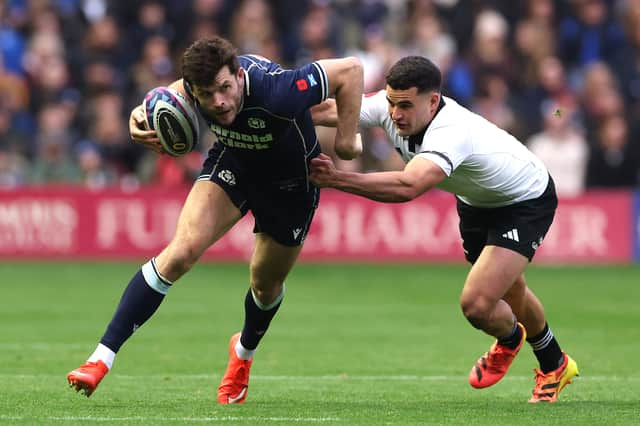
The encouraging thing for Scotland is that most of their problems are fixable. I don't think there is anything fundamentally wrong with the way they're trying to play, but they have to execute it better.
I don't think many people looked at the starting team against New Zealand and felt the selection was wrong. There were positions you could debate, but that's always going to be the case.
The wings were probably the most obvious area. Kyle Steyn and Jamie Dobie have both been playing exceptionally well for Glasgow Warriors, while Duhan van der Merwe and Darcy Graham have barely featured for Edinburgh this season.
Jamie Dobie has been outstanding for Glasgow, but ultimately, he's a scrum-half
Neither wing did much wrong against New Zealand, but neither had a significant impact. It's particularly tough on Dobie because he's been outstanding for Glasgow, but ultimately, he's a scrum-half who plays on the wing incredibly well rather than a specialist Test winger.
At Test level, I think you have to pick your best players in their strongest positions. That brings the conversation back to Duhan and Darcy, or potentially moving Kyle Rowe onto the wing and bringing Blair Kinghorn back at full-back.
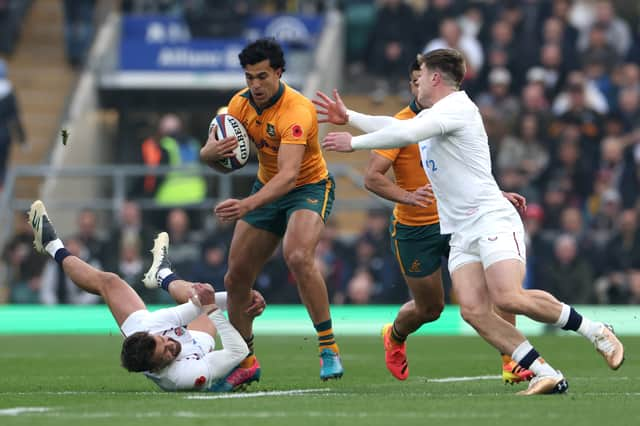
The aerial battle has become such a significant part of modern rugby, particularly at Test level, and with Joseph-Aukuso Suaalii such a dominant presence in the air for Australia, having someone of Kinghorn's size and aerial ability in the back three could be a real advantage for Scotland.
One change I would make is in the midfield, where I'd bring Rory Hutchinson in at 13 ahead of Huw Jones.
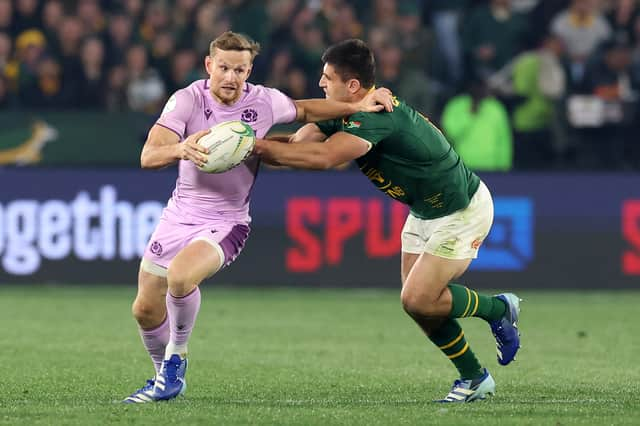
I thought Jones had some excellent moments against New Zealand and we all know what a dangerous attacking player he is. His ability to identify space, run brilliant lines and get on the outside of defenders is exceptional. But I'd really like to see what Hutchinson could offer.
Rory Hutchinson has a more rounded attacking game
He's a different type of player to Jones. While Huw is probably more dangerous as an individual running threat, I think Hutchinson has a more rounded attacking game in terms of bringing other players into the attack.
He's an excellent distributor, has great hands and offers another genuine playmaking option in the wider channels. Rather than simply looking to exploit space himself, he has the ability to create opportunities for those around him.
And I think that could be particularly valuable for Scotland at the moment.
So much of Scotland's attacking creativity comes through Finn Russell. He's an exceptional player, but I don't think he's quite playing at the incredibly high standards we've come to expect from him. When he's not at his best, Scotland can become too reliant on him to produce that moment of magic to unlock a defence.
Bringing Hutchinson into the midfield could take some of that responsibility off Russell's shoulders. With Sione Tuipulotu already offering a strong playmaking presence at 12, adding Hutchinson outside him could give Scotland a more balanced attacking threat and make them less predictable.
It's not a criticism of Jones because I think he's a brilliant player. But I'd like to see Hutchinson get that opportunity in a big Test match rather than waiting until the Japan game.
Leaving out Jack Dempsey would be a big call but...
I'd keep Ben White and Russell together at nine and ten.
Josh Bayliss was excellent off the bench and is pushing for a starting place. We all know what a brilliant player Jack Dempsey is, but I don't think he had his best game. He looked slightly short of match sharpness, which is understandable given his lack of recent competitive rugby.
It would be a big call, but does Townsend bring in Bayliss at eight, or start him at six and move Matt Fagerson to the back of the scrum?
Scotland also struggled to make an impact at the breakdown. Rory Darge is usually so effective in that area, but he seemed to be nullified. That could open the door for Freddy Douglas on the bench.
I think that only works with a six-two split, though. Freddy is a specialist openside and doesn't offer enough positional coverage if you're carrying just five forwards among the replacements. His breakdown work is unbelievably good, but he's still developing and needs to add more physicality to his game.
I'd expect Scott Cummings and Gregor Brown to continue in the second row, with Pierre Schoeman starting ahead of Rory Sutherland the most likely change in the front row.
Scotland's maul was an enormous weapon against New Zealand. Ewan Ashman completed his hat-trick in the 38th minute and every time Scotland kicked to the corner, they looked capable of scoring. Their maul defence was equally impressive.
Scotland also created plenty of opportunities in attack but couldn't turn that pressure into enough points. Jones was held up over the line twice and another huge opportunity from a five-metre lineout went unconverted.
Scotland have to find a solution to this problem
New Zealand defended those situations incredibly well, but at Test level, you simply have to turn those opportunities into points. And that's becoming a recurring frustration with Scotland. They've shown repeatedly that they're capable of competing with the best teams in the world for 40 or 50 minutes. The problem is turning those performances into victories.
We saw it against Argentina last year, when Scotland surrendered a 21-point lead, and again on Saturday when their performance deteriorated dramatically after the break.
I'm not sure whether that's down to the depth of the bench, the physical cost of the way they play or a drop in intensity and concentration. But whatever the reason, Scotland have to find a solution. At this level, being the better team for 50 minutes isn't enough.
As good as New Zealand were in the second half, Scotland were poor.
New Zealand turned the screw in the scrum
At scrum time New Zealand turned the screw and really pressurised Scotland. Unlike the first half, Scotland were unable to build pressure with territory and possession. Errors and turnovers gave New Zealand opportunity after opportunity to build pressure inside Scotland’s half. Scotland conceded 13 turnovers compared with just five from the All Blacks. That's a huge difference at Test level.
Scotland’s rugby is exhilarating to watch when they find their rhythm and are ruthless, but you cannot afford to surrender possession that frequently against the best teams because they will punish you.
Their attacking model is capable of ripping teams apart but it's incredibly dangerous and there will always be a risk-reward element to that style of rugby. The answer isn't to temper their attacking ambition. It's to execute with greater accuracy.
One area that will require particular attention this week is the scrum.
Scotland struggled there in the second half, and Australia's scrum looked aggressive against England. The Wallabies clearly felt they could gain some ascendancy over an English pack that is among the strongest scrummaging units in Test rugby.
In general, I was surprised by just how poor Australia were at Twickenham. They lost 45-22 and were cut open far too easily, particularly at the beginning of both halves. Les Kiss will have been hugely disappointed by how porous his side looked defensively.
England won collisions all game and whenever they moved the point of attack, they looked capable of scoring with ease particularly when stretched from touchline to touchline. This is something we have seen Scotland do to devastating effect over recent years, stretching the width of the pitch and I’m sure Gregor Townsend and Pete Horne will be looking keenly at how they can exploit these spaces in the Australian defence.
If Australia defend as narrowly as they did against England, Scotland have the players to exploit the space outside them. The key will be generating enough front-foot ball to give their playmakers those opportunities.
For Scotland, the priority has to be getting the fundamentals right. Fix the scrum, dominate the lineout, reproduce the powerful mauling game and, most importantly, look after the ball.
Australia are extremely dangerous from turnover possession. Where they struggled against England was when confronted by an aggressive, well-organised defensive line. And I think that's where Sunday's game could look quite different.
England didn't spend a huge amount of energy contesting every breakdown. Instead, they focused on getting back to their feet quickly, resetting their defensive line and generating aggressive line speed across the full width of the pitch.
They repeatedly caught Australia trying to play out the back, putting pressure on their playmakers before their attacking shape could develop.
Scotland don't consistently defend with that same aggression which will allow Australia more time on the ball and opportunities to attack the edges. Scotland will need to be more connected defensively and bring greater aggression to their line speed to stop Australia playing around them.
Scotland are a better team than Australia. They have a stronger set-piece, more dangerous attacking options and greater cohesion across the team.
If Scotland can get their attacking threats into the game like they did in the first half against New Zealand, if they are able to get their maul into the game, and ultimately, if they are able to maintain their level of performance from the first half on Saturday for 80 minutes, then they will have far too much for Australia and should win quite comfortably.
Comments
Want to join the conversation? Please or to comment on this article.