
UK inflation holds at 3% but where now for prices and interest rates in 2026?
“Higher energy prices risk being passed on by companies to consumers, and that will be the big worry going forward” – Susannah Streeter, Wealth Club
An unchanged inflation reading for last month has been described as the “calm before the storm” as consumers, borrowers and businesses brace themselves for price and interest rate hikes.
Official figures showed that the annual headline inflation rate flatlined at 3 per cent in February, prior to the impact of the conflict in the Middle East. The rate of consumer prices index (CPI) inflation was unchanged from the level reported in January, according to the latest data from the Office for National Statistics (ONS).
That inflation reading for last month was broadly in line with the predictions from economists and does not yet reflect the impact of the war in Iran on the cost of living, with the first attacks taking place at the tail end of February.
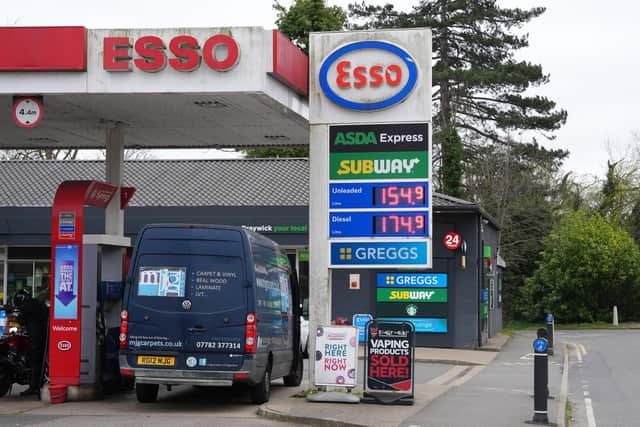

Oil and gas prices have jumped in recent weeks due to the conflict and other goods prices could also be affected by disruption to shipping through the Strait of Hormuz. Even if a resolution to the standoff is agreed there will be a short-term negative impact on inflation and the likelihood of higher interest rates in the coming months.
Susannah Streeter, chief investment strategist at Wealth Club, was one of several commentators describing the benign inflation data as the “calm before the storm” of higher prices.
She said: “Before the war with Iran broke out, causing destruction and chaos to energy facilities and supply routes, these numbers demonstrate that the price spiral had paused, with the headline rate of inflation staying at 3 per cent.
“Prices at the pumps had fallen back, easing the pressure on motorists and giving consumers a bit more to spend. Clothing, footwear, furniture and household goods rose slightly in price.

“What a difference a month makes. Even though oil has retreated from the frighteningly high levels hit over the past few weeks, Brent crude is still hanging stubbornly around $100 a barrel, and gas prices remain highly elevated.
“Higher energy prices risk being passed on by companies to consumers, and that will be the big worry going forward.”
She noted that core CPI, stripping out volatile energy and food prices, rose slightly to 3.2 per cent last month, from 3.1 per cent in January, indicating that underlying price pressures remain. These are likely to intensify, given that energy and freight costs are mounting and firms are likely to want to pass on that burden.
Experts have already warned that households could face spiralling food inflation in months if disruption caused by the conflict persists. Fresh forecasts by the Institute of Grocery Distribution (IGD) suggest that food inflation could increase from 3.6 per cent to “briefly reach over 8 per cent by June 2026”, if companies are impacted by the “most severe but short-lived energy shock scenario”.
The headline CPI rate of inflation reached a high of 11.1 per cent in October 2022 in the wake of the Russian invasion of Ukraine, which caused an oil and gas spike that saw some fuel prices at the pump push past 200p a litre.
Stuart Morrison, research manager at the British Chambers of Commerce, said: “For businesses across the UK, [the latest] inflation data represents the calm before the storm. Our forecast, published after the unrest began, shows that the war will delay the previously expected slowdown in inflation.
“UK firms are particularly exposed to the economic impact of the crisis in the Middle East as our electricity prices are tightly tethered to global gas prices. This will feed directly into higher costs and renewed inflationary pressure in the months to come.
“The cost of living and the cost of doing business are two sides of the same coin. The government must continue to keep all options on the table to help firms deal with rising energy bills. At the same time, tackling other cost pressures, from business rates to national insurance, must remain a key priority.”
Last week saw the Bank of England holding the UK bank base rate at 3.75 per cent, confirming that the war in the Middle East had put paid to a previously expected cut. The central bank said a “shock to the economy” sparked by the US-Israeli action in the region could push CPI back up to 3.5 per cent this summer, with rate-setters deciding a pause would give them time to consider the scale of the fallout. Some analysts have warned that inflation could head towards 4 per cent by year‑end.
Prior to the conflict many economists had been expecting at least a couple of quarter-point interest rate cuts this year as inflation looked to be cooling. Those forecasts have now been flipped on their head.
James Green, regional director of financial advisory firm deVere Group, said: “Interest rates will, we expect, stay higher-for-longer. The idea of rapid cuts this year is becoming increasingly unlikely.
“The Bank of England will be unlikely to ease policy while inflation is accelerating again. Doing so would risk losing control of price stability.
“For households, the consequences are immediate. Mortgage costs will remain elevated, refinancing becomes more expensive, and disposable income is squeezed further as living costs rise.
“It’s a direct hit on household finances. Borrowing remains costly, and inflation erodes purchasing power at the same time.
“People need to take action now by reducing exposure to variable-rate debt, securing fixed terms where possible and strengthening savings buffers,” he added.
Comments
Want to join the conversation? Please or to comment on this article.